6R80 Failures
Why Most 6R80 Failures Are Caused by “Good Intentions”?
Most 6R80 failures don’t begin with abuse, neglect, or some dramatic mechanical event. They begin with owners doing what they believe is the right thing. The vehicle starts to feel a little different, maybe a slight hesitation on a shift or a bit of warmth when towing, and the natural response is to book a service. Fresh fluid, maybe a flush, perhaps a quick check by a general workshop. After all, servicing is how you look after a drivetrain. That logic worked perfectly on older automatics. On a modern 6R80, it’s often the first step down the wrong path.
6R80 Failures
The uncomfortable truth is that many 6R80s are quietly damaged by well-intentioned servicing long before any hard parts fail. The gearbox is not fragile, but it is unforgiving of misunderstanding. It relies on extremely tight hydraulic control, precise timing, and stable converter behaviour. When any of those begin to drift, the transmission doesn’t immediately stop working. Instead, it adapts. It compensates. It hides the problem while continuing to drive “well enough” for months or even years. That adaptive behaviour is exactly what misleads owners and workshops alike.
A typical story…
A typical story goes like this. The vehicle tows a van regularly or has had a mild tune. Shifts are still mostly clean, but something feels off when hot or under load. A service is performed. For a short time, everything feels better. The owner relaxes, assuming the issue was fluid-related. What actually happened is that fresh oil temporarily improved viscosity and friction behaviour, masking hydraulic wear that was already present. The underlying problem didn’t go away. It simply went quiet.
From there, the cycle repeats. Another service. A converter replacement. A tune adjustment. Each step is taken with good intentions, yet none of them address the real failure mechanism. Meanwhile, the valve body continues to lose authority, the converter works harder to compensate, temperatures creep higher, and clutch timing slips further out of range. By the time the gearbox finally does something dramatic enough to demand attention, the repair has escalated from a controllable hydraulic correction into a full rebuild conversation.
This is why so many 6R80 owners feel blindsided. Owners didn’t ignore the problem. They maintained the vehicle. They followed advice. What they were missing wasn’t care, it was context. Modern transmissions don’t fail because they aren’t serviced. They fail because the wrong type of service is applied at the wrong stage of wear.
Understanding this changes everything. It reframes the 6R80 not as a gearbox that “just lets go,” but as one that gives ample warning to anyone who knows how to read it. The tragedy is not that these transmissions fail. The tragedy is how often they could have been saved earlier if good intentions had been paired with the right engineering understanding.
Mistake #1: Treating the 6R80 Like an Old Automatic
The first and most damaging service mistake made with the 6R80 is assuming it behaves like the automatics that came before it. Many workshops and owners still approach it with a mindset shaped by older four-, five- and even six-speed transmissions, where regular fluid changes and basic servicing genuinely prevented most failures. In those gearboxes, hydraulic tolerances were wide, converter strategies were crude, and wear progressed slowly and visibly. If something started to slip, a service often bought meaningful time. The 6R80 does not live in that world.
The 6R80 is a timing-dependent transmission.
It relies on extremely tight hydraulic control to manage clutch-to-clutch shifts, adaptive pressure learning, and converter behaviour under load. Its valve body is not simply distributing oil; it is actively regulating pressure dozens of times per second to keep clutch handovers precise. When that precision begins to drift, the transmission does not immediately fail. It adapts. 6R80 reshapes its pressure curves. It alters shift overlap. It increases converter work. From the driver’s seat, it still feels “okay,” just slightly different.
This is where the old-automatic mindset becomes dangerous. A workshop feels a mild flare, a soft shift, or a bit of heat when towing and reaches for the standard solution: fresh fluid, maybe a flush, maybe a reset. On an older box, this was sensible. On a 6R80, it often accelerates the failure timeline. Fresh fluid improves viscosity and friction temporarily, which masks leakage and bore wear in the valve body. The gearbox feels better, not because the problem is fixed, but because the fluid is compensating for hardware that is already out of tolerance.
6R80 Failures Exposed
That temporary improvement reinforces the wrong conclusion. The owner believes the service worked. The workshop believes the diagnosis was correct. Meanwhile, the valve body continues to bleed pressure, the converter continues to slip under load, and the adaptive system works harder to hold everything together. What looks like maintenance success is actually the transmission burning through its remaining margin.
Another legacy assumption is that shift quality alone tells the whole story. On older automatics, harsh or slipping shifts were reliable indicators of mechanical trouble. On the 6R80, shift feel can remain deceptively good right up until the system runs out of adaptive range. A transmission can feel smooth while running hot, slipping the converter, and eroding clutch life in the background. By the time the shifts finally deteriorate enough to trigger concern, the internal damage is already well advanced.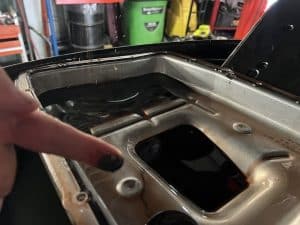
This is why treating the 6R80 like an old automatic creates a false sense of security. Traditional servicing focuses on fluid condition and basic feel. The 6R80 demands interpretation of behaviour under heat, load, and time. Without that context, well-meaning maintenance becomes a delay tactic rather than a solution.
The tragedy is that nothing about this mistake comes from neglect. It comes from applying yesterday’s logic to today’s gearbox. The 6R80 doesn’t fail because it isn’t serviced. It fails because it is serviced as if it were simpler than it really is.
Mistake #2: Flushing a 6R80 That Is Already Hydraulically Worn
If there is one service action that has quietly shortened the lives of more 6R80s than almost anything else, it is the well-intentioned transmission flush performed at the wrong stage of wear. Flushing feels responsible. It sounds thorough. It looks proactive on an invoice. And on a hydraulically compromised 6R80, it is often the moment the clock starts ticking faster instead of slower.
To understand why, you have to separate fluid condition from hydraulic control. On a healthy 6R80, clean fluid is essential. On a worn 6R80, fluid is no longer the problem — it is the last thing compensating for the problem. Once valve body bores begin leaking, once regulator valves start oscillating, once solenoids lose precision under heat, the transmission is relying on fluid viscosity, friction modifiers, and adaptive pressure learning to hold everything together. The fluid becomes part of the control system, not just a lubricant.
6R80 Failures due to Flush
When a flush is performed on a gearbox already in this state, several things happen at once. Fresh fluid removes varnish and suspended material that was unintentionally helping seal worn bores. The new fluid flows more freely, which sounds good, but in a valve body with clearance loss it actually increases internal leakage. Pressure that was marginal but sufficient before the flush now bleeds away faster. The adaptive system senses slip and responds by increasing pressure and overlap, forcing the converter and clutches to work harder to maintain shift quality.
The result is a familiar pattern. Immediately after the flush, the transmission feels excellent. Shifts sharpen. Temperatures may even drop slightly. This is the honeymoon period, and it is dangerously misleading. What the driver is feeling is not a repaired transmission, but a temporarily rebalanced one. The hydraulics are still worn. They are simply being masked by fresh oil and maximum adaptive effort.
Over the following weeks or months, the decline accelerates. Converter slip increases because lockup control has less hydraulic authority. Heat rises because slip equals energy loss. Solenoids begin operating at the edge of their control range for longer periods. Clutch timing drifts further because the valve body can no longer maintain stable pressure across temperature changes. Eventually, the transmission reaches a point where adaptation can no longer compensate. That is when flares become obvious, shudder appears, or overdrive becomes unstable.
6R80 “failed shortly after a service”
This is why so many owners report that their 6R80 “failed shortly after a service.” The service did not cause the wear. The wear was already there. The flush simply removed the last buffer the system had. In engineering terms, the flush reduced damping in a system that was already oscillating. In real-world terms, it took a gearbox that was limping along and asked it to run a sprint.
The most dangerous part is that flushing is often recommended as a preventative measure. Owners who tow or drive long distances are told they are doing the right thing by refreshing fluid regularly. The advice is not wrong in principle. It is wrong in timing. Once hydraulic wear has begun, flushing without correcting the valve body and converter logic is not preventative maintenance — it is stress testing a weakened system.
This is why Redorq treats flushing as a conditional tool, not a default service. On a healthy 6R80, it supports longevity. On a worn one, it accelerates 6R80 failures unless hydraulic corrections are made at the same time. The mistake is not changing the fluid. The mistake is believing fluid alone can fix a control problem that is mechanical in nature.
A flush should never be the first response to a changing 6R80. It should be the last step after hydraulic stability has been restored.
Mistake #3: Replacing the Torque Converter Without Fixing the Hydraulics
One of the most common escalation mistakes with 6R80 failures is replacing the torque converter in isolation. By the time converter shudder, slip under load, or lockup instability becomes obvious, many workshops quite reasonably point to the converter as the culprit. After all, the symptoms line up. Shudder at cruise, heat under towing, unstable lockup on hills. The converter gets blamed, the gearbox stays in the car, and everyone hopes the problem is solved.
Sometimes it feels better. Briefly. And that short-lived improvement is exactly what makes this mistake so costly.
The torque converter in a 6R80 rarely fails on its own.
It is almost always reacting to what the valve body can no longer control. Converter lockup pressure, slip modulation, and release timing are all commanded hydraulically. When the valve body is worn, especially in the pressure regulator and TCC control circuits, the converter is forced to operate in unstable conditions. It slips when it should hold. It hunts between partial and full lock. 6R80 generates heat because it has no choice. Over time, the lockup clutch glazes, the cover distorts, and shudder becomes the driver-facing symptom.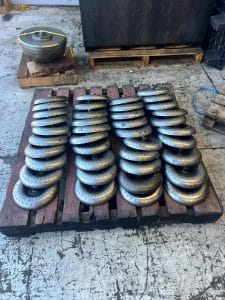
Replacing the converter
Replacing the converter at this stage addresses the damage, not the cause. A fresh converter installed behind a leaking valve body is immediately placed back into the same hostile environment. The lockup clutch is once again asked to compensate for pressure loss. The new friction material is subjected to unstable apply forces. Heat generation resumes. The gearbox may feel smoother initially because the clutch surface is fresh, but the hydraulic conditions that killed the first converter are still present.
This is why many owners report converter shudder returning months after replacement. It isn’t bad luck. It isn’t a defective converter. It’s a system problem repeating itself. The valve body continues to bleed pressure, the solenoids continue to lag under heat, and the converter once again becomes the sacrificial component absorbing the consequences.
There is also a secondary effect that makes this mistake even more dangerous. Converter replacement introduces fresh debris pathways. Any remaining contamination in the cooler, lines, or valve body is circulated immediately through a brand-new converter. If the valve body is already worn, pressure instability can cause the new converter clutch to shed material faster than expected, accelerating contamination throughout the transmission. What was once a mostly hydraulic issue now begins to affect clutches, pump surfaces, and bearings.
From an engineering perspective, the converter is not the brain of the system. It is an actuator. When the commands it receives are unstable, replacing the actuator does nothing to fix the command source. In fact, it often delays proper diagnosis by creating the illusion that progress has been made.
How we approach 6R80 Failures at Brisbane Tuning & Turbo
This is why Redorq does not treat converter replacement as a standalone repair in a symptomatic 6R80. The converter and valve body are evaluated as a pair. If the hydraulics are not corrected, replacing the converter is not a repair. It is a reset of the countdown timer.
The mistake is not replacing the converter when it is damaged. The mistake is believing the converter failed independently. In 6R80 failures, it almost never does.
Mistake #4: Chasing Shift Feel Instead of Reading What the Shift Is Telling You
One of the most subtle but damaging service mistakes with the 6R80 is focusing on how the shift feels instead of what that shift behaviour actually represents hydraulically. Owners and workshops alike tend to describe the gearbox in emotional terms. It feels a bit lazy. It feels slightly harsh. Even 6R80 feels busy. It feels fine most of the time. The problem is that feel is the last thing to change in a modern adaptive transmission, not the first.
The 6R80 is extremely good at hiding its problems. Its adaptive strategy continuously adjusts line pressure, clutch overlap and converter behaviour to maintain acceptable shift quality. As long as the system has room to adapt, the gearbox can feel smooth while doing increasingly unhealthy things internally. By the time shift feel becomes obviously wrong, the transmission is usually well past the point where simple intervention would have saved it.
This is why chasing shift feel with software tweaks, adaptive resets or “softening” calibrations is such a common trap. When a shift becomes harsh, the instinct is to reduce pressure. When a shift becomes lazy, the instinct is to increase it. Both approaches treat the symptom, not the cause. If the valve body is bleeding pressure or solenoids are lagging under heat, changing commanded pressure only changes how hard the system works to compensate. It does not restore control.
6R80 Failures examples
A good example is the classic 3–4 behaviour change under load. Early on, the shift may feel slightly longer or softer when hot. Later, it may flare briefly. Eventually, it will bang or hesitate. Each of these phases feels different, but they all originate from the same hydraulic truth: the transmission is struggling to release one clutch and apply another with the precision it once had. The feel changes because the adaptive strategy is running out of options.
Another common example is the “fine cold, bad hot” complaint. Cold fluid is thicker. It masks leakage. As temperature rises and viscosity drops, worn bores and tired solenoids are exposed. The gearbox begins to lose authority, but only once fully heat soaked. A driver focused on shift feel might describe this as inconsistency. An engineer reads it as a hydraulic system operating on the edge of its control window.
What makes this mistake particularly damaging is that it encourages delay. As long as the gearbox still drives reasonably well, owners postpone deeper investigation. Services are repeated. Adaptives are reset. Minor tune changes are made. Each step buys a little time while pushing the system closer to the point where it can no longer hide the wear.
At Brisbane Tuning & Turbo
Redorq approaches shift behaviour differently. We treat every shift as a diagnostic message. A change in timing, firmness or consistency is not something to smooth over; it is information. It tells us where pressure is being lost, which circuit is struggling, and how close the transmission is to exhausting its adaptive range. The goal is not to make the shift feel nicer today. The goal is to understand why it feels different at all.
The mistake is assuming a smooth-feeling 6R80 is a healthy one. In reality, the most dangerous transmissions are often the ones that still feel “mostly fine.” They are the ones quietly working hardest to hide the damage that will eventually surface all at once.
Mistake #5: Ignoring Heat Because There’s No Warning Light
One of the most destructive assumptions made with the 6R80 is that if there’s no temperature warning and no limp mode, everything must be under control. Owners will often say the gearbox “doesn’t overheat,” meaning it hasn’t thrown a dash message or shut itself down. From an engineering perspective, that statement is almost meaningless. By the time a 6R80 is hot enough to trigger a warning, the damage has already been done.
The 6R80 operates safely within a relatively narrow thermal window. Above that window, fluid viscosity drops sharply, clutch friction behaviour changes, and hydraulic leakage that was once manageable becomes uncontrollable. None of this requires a warning light. The transmission can be quietly degrading itself for tens of thousands of kilometres while still appearing perfectly normal to the driver.
Heat in 6R80 Failures
Heat in a 6R80 is rarely a single event. It is cumulative. Towing up long grades, sitting in traffic with a trailer, sand driving, repeated short trips with partial lockup, and tuned low-RPM torque all add small amounts of thermal stress. Each time the converter slips a little longer than it should, or the valve body struggles to maintain pressure under load, temperature rises slightly. The fluid recovers. The driver never notices. Internally, wear accelerates.
What makes this mistake particularly dangerous is that many service decisions are made based on peak temperature, not thermal behaviour. A scan tool might show “normal” temperatures during a short test drive, leading to the conclusion that cooling is adequate. In reality, the damage occurs during long-duration heat soak, not short spikes. A 6R80 that reaches 95–100°C repeatedly under load may never log a fault, but it is steadily moving toward hydraulic instability.
The torque converter is both a victim and a contributor
Another layer to this problem is the converter’s role in heat generation. The torque converter is both a victim and a contributor. As valve body control begins to drift, the converter is forced to slip more often and for longer periods. That slip generates heat, which further thins the fluid, which further reduces hydraulic authority. The loop feeds itself quietly. By the time shudder appears, the converter has already been running hot for a long time.
Many well-meaning services attempt to address this by adding or upgrading coolers without correcting the hydraulic cause of the heat. While improved cooling can help once control is restored, it cannot compensate for a valve body that is bleeding pressure or a converter clutch that is slipping unpredictably. Cooling treats the symptom. Hydraulic correction treats the disease in 6R80 Failures.
Brisbane Tuning & Turbo with our Redorq programm treats heat as a diagnostic signal, not an afterthought. We look at when temperatures rise, how quickly they rise, how long they take to stabilise, and how the gearbox behaves as temperature changes. A 6R80 that shifts cleanly cold but degrades as it warms is not “just getting hot.” It is revealing internal leakage and loss of control. Ignoring that signal because the dash stays quiet is one of the fastest ways to turn a recoverable transmission into a rebuild.
The absence of a warning light does not mean the absence of damage. In modern automatics like the 6R80, it often means the system is still managing to hide the problem — for now.
Mistake #6: Treating the Converter as a Victim Instead of a Cause
One of the most expensive misunderstandings surrounding the 6R80 is the belief that the torque converter is simply an innocent casualty of internal failure. In reality, the converter is very often the initiator of the damage that follows. When 6R80 Failures begins to deteriorate, the converter is not passively reacting to a failing transmission; it is actively compensating for hydraulic instability elsewhere in the system, and in doing so, it accelerates the failure curve.
The converter’s job in 6R80 Failures
The converter’s job is not just to multiply torque. In a modern automatic, it is a critical thermal and control device. It absorbs slip, smooths torque application, manages lockup transitions and protects the driveline from harsh engagement. When the valve body begins to lose pressure control or timing accuracy, the converter is forced to operate in partial slip far more often than intended. This creates heat. That heat thins the ATF. Thinner ATF further reduces hydraulic sealing. Pressure control degrades even more. The converter is now trapped in a feedback loop it did not create but is being punished for.
Many workshops misread the symptoms at this stage. The customer reports shudder, vibration, heat under load or unstable cruising behaviour. The converter is blamed, replaced or flushed, and for a short time the problem appears resolved. But the underlying cause — the valve body’s inability to hold and regulate pressure — has not been corrected. The new or refurbished converter is immediately subjected to the same unstable hydraulic environment that killed the first one. The clock simply resets.
This is why converter-only fixes so often fail in 6R80s. The converter is not the root problem; it is the first component to show distress because it is the most sensitive to pressure drift and heat. Treating it as a victim rather than recognising it as an early warning device is one of the most costly mistakes owners and workshops make. The correct approach is always systemic. If the converter shows signs of distress, the hydraulics that control it must be stabilised first. Anything else is temporary at best and destructive at worst.
Mistake #7: Waiting for a Failure Code or “Hard Symptom”
Modern vehicles have trained owners to trust warning lights and fault codes as the definitive indicators of trouble. Unfortunately, the 6R80 does not fail in a way that suits this mindset. 6R80 does not throw codes early. It does not announce hydraulic decay electronically. It fails analog, not digital.
The 6R80’s adaptive strategy is extremely effective at hiding wear. As pressure bleeds, bores ovalise and timing windows drift, the TCM simply compensates. It increases line pressure where it can. TCM in 6R80 adjusts fill times. It modifies shift scheduling. From the driver’s seat, the gearbox still “works.” From an engineering perspective, it is operating further and further outside its design envelope. By the time the system can no longer adapt, the damage is already well advanced.
This is why waiting for a hard symptom is such a dangerous strategy. By the time a 6R80 bangs violently, slips obviously, overheats consistently or sets a ratio error, the failure has already crossed from hydraulic instability into mechanical damage. Clutches have been slipping under load. The converter has been overheating. Debris has circulated. The repair window has narrowed dramatically.
The absence of fault codes in 6R80 Failures
The absence of fault codes is not reassurance. It is often a sign that the failure is still in its most preventable stage. Subtle behaviours — heat sensitivity, load-related hesitation, inconsistent shift feel, converter behaviour that changes with temperature — are the real diagnostic signals. These are the moments when intervention is cheapest and most effective. Waiting for the gearbox to “make it obvious” is how controllable problems become full rebuilds.
The industry’s reliance on codes has created a blind spot. The 6R80 does not fail loudly at first. It fails politely. It asks quietly for attention long before it demands it. The workshops that listen early save transmissions. The ones that wait for confirmation lights replace them.
How to Service a 6R80 Correctly Without Killing It
Servicing a 6R80 correctly is not about doing more- it is about doing the right thing at the right time. This transmission does not reward generic maintenance. It rewards understanding. Fluid changes, converter work, tuning adjustments and cooling upgrades all have a place, but only when they are applied within the correct diagnostic context.
The correct starting point is always behaviour, not mileage and not fault codes. How does the gearbox behave cold versus hot? How does it respond under load? Does converter behaviour remain stable at cruise? Are shifts consistent across temperature and throttle? These questions reveal far more about the health of a 6R80 than any scan report ever will.
Valve Body Wear in 6R80 Failures
When early hydraulic drift is present, the priority is restoring control, not refreshing consumables. That means addressing valve body wear before it escalates, stabilising pressure regulation, correcting timing drift and ensuring the converter is not being forced into compensatory slip. When this is done early, the transmission can run cooler, shift cleaner and tolerate towing and tuning without accelerating its own destruction.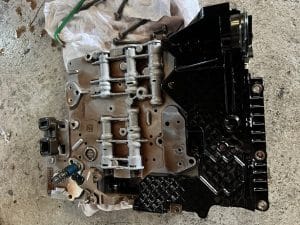
The irony is that the most reliable 6R80s are often the ones that have been intervened on intelligently, not the ones that have simply been “left alone.” Preventative hydraulic correction extends life far more effectively than reactive mechanical repair. It keeps the gearbox operating within its design limits instead of relying on adaptation to survive outside them.
The 6R80 is not a weak transmission. It is a precise modern transmission. It fails when precision is lost and continues to be treated with blunt tools. When serviced with an understanding of hydraulics, heat and timing, it is capable of long, reliable life even in Australian conditions.
The real mistake is not servicing the gearbox.
The real mistake is servicing it without understanding what it is trying to tell you.
That understanding is what separates a maintained 6R80 from a rebuilt one.
Please book your automatic transmission diagnostic here to prevent 6R80 failures.