

Audi Q7 P20EE and P229F: SCR Efficiency and NOx Sensor Faults Explained.
An engine warning light appears on your Audi Q7. A scan finds P20EE, P229F, or both. You may already have been told it needs a NOx sensor or an expensive SCR catalyst. Before approving the repair, it is worth asking what testing supports that recommendation.
These codes identify a problem with emissions performance or monitoring. They do not, on their own, establish which part has failed. At Brisbane Tuning & Turbo, our approach is to investigate the cause, explain the findings and discuss the repair options before recommending component replacement.
Which Audi Q7 models does this apply to
This article concerns diesel Q7 variants fitted with AdBlue-based selective catalytic reduction, or SCR. Equipment varies with engine, model year and original market. We confirm the vehicle specification and full fault descriptions before selecting the diagnostic procedure. A repair bulletin or part recommendation for an overseas Q7 should not automatically be applied to an Australian vehicle.
What does P20EE mean
P20EE, sometimes displayed as P20EE00, means that the monitored NOx conversion efficiency of the SCR catalyst is below the required threshold for Bank 1. In plain English, the control system has detected that exhaust-gas treatment is not achieving the expected result.
That finding needs investigation. Possible areas include AdBlue quality and dosing, exhaust conditions, NOx measurement and the catalyst itself. A catalyst replacement should follow evidence that distinguishes a genuine catalyst problem from faults elsewhere in the system.
What does P229F mean
P229F, sometimes displayed as P229F00, is a range or performance fault for the Bank 1 Sensor 2 NOx sensor. On the relevant SCR configuration, this is the downstream sensor used to help assess exhaust treatment.
A faulty sensor is one possibility.
Its wiring, connections, operating conditions and applicable control software also need consideration. The code description gives us a direction for testing; a replacement recommendation needs supporting results.
How AdBlue and the NOx sensors work together
AdBlue is stored separately from diesel fuel and metered into the exhaust. It provides ammonia for the SCR reaction, which converts nitrogen oxides into nitrogen and water. NOx sensor signals help the control system regulate and monitor treatment. Exhaust temperature and engine operating conditions matter to that process.
P20EE and P229F appear together
When P20EE and P229F appear together, we need to establish whether the NOx feedback is trustworthy before drawing conclusions about catalyst efficiency. Replacing a catalyst while an unresolved sensor performance fault remains can leave the underlying problem unanswered.
Why clearing the codes or topping up may not fix it
Adding AdBlue can address an insufficient fluid level. It will not repair an electrical fault, restore a defective dosing system or prove that the catalyst is working correctly.
Clearing a code removes a stored warning but does not demonstrate a repair. A fault may return only after the vehicle reaches the operating conditions needed to run its monitoring checks. Photograph the dashboard message and keep any scan report before codes are cleared. If a no-restart countdown is displayed, arrange assessment promptly; neither P20EE nor P229F should be assumed to produce that warning on every Q7.
What if DPF or EGR fault codes are also present?
BTT reviews the complete fault record because SCR operates alongside other engine and emissions systems. A NOx-related code may be only one part of the picture. We consider which faults are current, the conditions recorded when they occurred and whether they could affect later tests.
EGR reduces the formation of nitrogen oxides during combustion. A fault affecting EGR flow can change the NOx entering the exhaust-treatment system. This is why an accompanying EGR fault may need investigation before we assess SCR performance. It does not mean that every P20EE code is caused by the EGR valve.
The DPF captures soot, while SCR treats nitrogen oxides. DPF regeneration changes exhaust temperature and engine control strategies, so regeneration status matters when interpreting readings. Pressure-sensor or regeneration faults may require investigation before a meaningful SCR evaluation can be completed.
For example, if a scan records an EGR control fault alongside P20EE and P229F, we would establish which problems affect the validity of the planned tests. If pressure readings suggest a DPF problem, we would check the readings and relevant sensors rather than assume the filter is blocked. The diagnostic order depends on the evidence.
A forced DPF regeneration
A forced DPF regeneration is not a default treatment for these SCR or NOx sensor codes. It should only be considered when the DPF assessment and the vehicle-specific procedure justify it. Detailed DPF and EGR fault diagnosis are separate subjects.
Could software be involved?
Yes, on certain vehicles. Audi issued a North American bulletin for the 2013 Q7 TDI with the CNRB engine covering several codes, including P20EE00 and P229F00. Where guided testing found no relevant component or electrical fault, the bulletin directed an engine-control software update and advised against unsupported parts replacement. [1]
This is a specific example, not a universal fix for Australian Q7s. Any software action must match the VIN, engine, control-unit identification and current manufacturer information. It illustrates why checking applicability matters before ordering parts.
How BTT approaches the P20EE and P229F diagnosis
We start with the symptoms, warning messages, previous repairs and a diagnostic scan. Depending on the findings and agreed scope, further assessment may include checking wiring and connectors, inspecting for exhaust or AdBlue leaks, assessing fluid quality, and testing delivery pressure or dosing.
Sensor performance and SCR operation need to be assessed under suitable conditions using information for the particular vehicle. A single reading taken at idle is not a complete catalyst-efficiency test. Where specialist programming or additional work is required, we explain the next step before proceeding.
After a repair, verification may require prescribed checks and a suitable drive cycle. An extinguished warning lamp immediately after clearing codes is not enough, on its own, to confirm the original fault has been resolved.
What will the repair cost
The cost depends on what has failed and what is needed to establish the cause. Wiring repair, sensor replacement, dosing-system work and catalyst replacement have different parts and labour requirements. Access, part compatibility and any required programming or adaptation also affect the estimate.
Contact BTT for the initial assessment fee and scope. If further testing is needed, we discuss the additional work and obtain approval. Once there is enough evidence, we explain the recommended repair and provide an estimate with GST included. A diagnostic assessment may identify a confirmed fault while also identifying tests needed to evaluate the remaining system.
Book an Audi Q7 emissions diagnostic assessment in Brisbane
If your Q7 has P20EE, P229F, recurring AdBlue warnings or a no-restart countdown, contact Brisbane Tuning & Turbo. Tell us the year, engine, exact dashboard message and any available fault codes. Previous repair invoices and diagnostic reports are useful too.
Our aim is to explain what the assessment has established, what remains uncertain and which next step the evidence supports. That gives you a clearer basis for deciding what to repair and how much to invest.
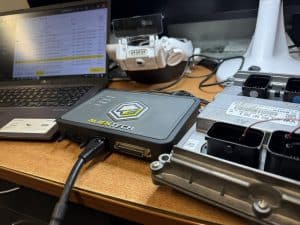
Audi Q7 P20EE or P229F
