Mercedes 7G-Tronic (722.9) Transmission Problems & Repairs
Brisbane Tuning & Turbo comprehensive workshop guide covering common Mercedes 722.9 transmission problems & repairs and faults, warning signs, fault codes, diagnostics, repair options, maintenance and preventative servicing.
Thousands of Mercedes-Benz vehicles across Australia are fitted with the 7G-Tronic (722.9) automatic transmission. For many owners, it delivers years of smooth, reliable service. For others, it suddenly develops symptoms such as limp mode, harsh shifting, transmission shudder, delayed engagement or warning messages that appear without warning. The challenge is that these symptoms can be caused by several completely different faults, ranging from relatively straightforward electronic repairs through to major internal transmission wear. Understanding which system has actually failed is the key to avoiding unnecessary repairs.
Today, the 722.9 remains one of the most common Mercedes-Benz automatic transmissions seen in Australian workshops. It is fitted to thousands of vehicles still on the road, ranging from everyday commuter cars through to luxury sedans, SUVs and AMG performance models.
Although the transmission has earned a reputation for smooth operation and excellent driving refinement, it is also one of the most misunderstood automatic transmissions. Many owners are advised to replace the entire transmission when the actual fault may be limited to a conductor plate, valve body, torque converter or another repairable component.
At Brisbane Tuning & Turbo, we believe accurate diagnosis should always come before major repairs. Understanding how the 722.9 operates and recognising its common failure patterns allows many problems to be repaired without unnecessary transmission replacement.
About This Workshop Handbook
This guide has been intentionally developed as a living Mercedes 7G-Tronic (722.9) workshop handbook rather than a traditional website article.
Our goal is to build one of Australia’s most comprehensive independent resources on the Mercedes-Benz 722.9 transmission. As new workshop experience, diagnostic procedures, repair information and technical articles become available, this guide will continue to grow and be updated.
You may occasionally find references to topics or dedicated articles that are still being developed. These will be added over time as part of our expanding Mercedes 722.9 Knowledge Centre. (we mechanics first not web marketers).
Whether you’re researching a fault code, trying to understand a transmission problem or deciding on the most appropriate repair, we hope this guide becomes a valuable resource you can return to whenever you need it.
Production Years Mercedes 7G-Tronic (722.9) Transmission
The Mercedes-Benz 722.9 transmission entered production in 2003 and remained Mercedes-Benz’s primary seven-speed rear-wheel-drive automatic transmission for approximately a decade before the gradual introduction of the newer 9G-Tronic (725.0) transmission.
Throughout its production life Mercedes-Benz introduced numerous hardware revisions, software calibrations and component updates to improve shift quality, durability and compatibility with newer engine platforms. As a result, two vehicles fitted with a 722.9 transmission may behave quite differently depending on their production year and software version.
Because so many of these vehicles remain in service today, the 722.9 continues to be one of the most important Mercedes-Benz transmissions for independent specialists to understand.
Mercedes-Benz Models Equipped With The 722.9
The 722.9 transmission was fitted to a wide range of Mercedes-Benz vehicles, including:
- C-Class
- E-Class
- S-Class
- CLS-Class
- CLK-Class
- SL-Class
- SLK-Class
- GLK-Class
- ML-Class
- GL-Class
- R-Class
- Selected G-Class models
- Numerous AMG variants
Depending on the application, the transmission was paired with four-cylinder, V6, V8 and V12 petrol engines, as well as several Mercedes-Benz diesel engines.
This broad vehicle coverage means that many owners searching for transmission problems are experiencing faults within the same 722.9 transmission, regardless of which Mercedes-Benz model they drive.
Why Mercedes 7G-Tronic (722.9) Transmission Became So Popular
The success of the 722.9 transmission came from its ability to deliver smooth gear changes, responsive performance and excellent highway refinement across a wide variety of vehicles.
Key features include:
- Seven forward gears for improved acceleration and reduced engine RPM.
- Electronically controlled hydraulic shifting.
- Adaptive shift strategies that respond to driving style.
- Torque converter lock-up across more operating conditions for improved efficiency.
- Compatibility with a wide range of Mercedes-Benz engines.
These features helped establish the 722.9 as one of Mercedes-Benz’s most important automatic transmissions and explain why it remains so common in workshops today.
Mercedes 7G-Tronic (722.9) Transmission Common Strengths And Weaknesses
Like any sophisticated automatic transmission, the 722.9 has both strengths and known failure points.
When serviced correctly, these transmissions can provide many years of reliable operation while delivering excellent driving comfort, refined shift quality and strong performance. The core gearbox itself is generally robust, and many vehicles travel well beyond 250,000 kilometres before requiring major internal repairs.
Most problems seen in Australian workshops do not begin with catastrophic mechanical failure. Instead, they usually develop gradually through faults involving the conductor plate, internal speed sensors, valve body, torque converter lock-up clutch or electronic control systems.
Recognising these early warning signs is critical because many of these faults can often be repaired before they progress into more expensive internal transmission damage.
Throughout this guide, we’ll explain how the 722.9 transmission works, the most common symptoms and fault codes, why these failures occur, and how Brisbane Tuning & Turbo approaches diagnosis and repair to identify the most appropriate solution for each vehicle.
Is The Mercedes 722.9 A Good Transmission?
The short answer is yes. From an engineering perspective, the Mercedes-Benz 722.9 (7G-Tronic) is a robust and highly capable automatic transmission. When serviced correctly and diagnosed properly, it is capable of delivering excellent shift quality, strong torque capacity and a service life well beyond 250,000 kilometres.
However, the 722.9 is also one of the most technically complex automatic transmissions Mercedes-Benz has produced. Its sophisticated electronic control systems, electro-hydraulic valve body and adaptive shift strategies provide exceptional refinement, but they also introduce failure points that require specialist knowledge to diagnose correctly.
At Brisbane Tuning & Turbo, we do not judge a transmission simply by whether it develops faults. Instead, we assess two key factors:
- How strong is the transmission mechanically?
- How accurately can its faults be diagnosed and repaired?
In our experience, the 722.9 performs well in both areas. The mechanical gearbox itself is generally durable, while many common failures occur in individual serviceable components rather than the complete transmission.
Expected Service Life of a Mercedes 7G-Tronic (722.9) Transmission
There is no fixed lifespan for a 722.9 transmission because operating conditions have a significant influence on component wear. Driving style, maintenance history, engine output, towing, ambient temperatures and transmission fluid condition all affect longevity.
Vehicles that receive regular transmission servicing and are not subjected to excessive thermal loading commonly exceed 250,000 kilometres before major internal repairs become necessary. Some examples continue operating well beyond 300,000 kilometres with only routine maintenance and minor component repairs.
Conversely, neglected fluid changes, prolonged overheating, contaminated transmission fluid or repeated operation with existing faults can significantly reduce service life.
It is important to understand that many early 722.9 problems are not indicators of complete gearbox failure. In many cases, the internal geartrain remains mechanically sound while an electronic or hydraulic component requires attention.
Typical Reliability
From a workshop perspective, the 722.9 transmission can be divided into four primary systems:
- Mechanical geartrain
- Hydraulic control system
- Electronic control system
- Torque converter assembly
The mechanical geartrain is generally reliable and capable of handling substantial torque when correctly lubricated and maintained.
The electronic system, particularly the conductor plate and internal speed sensors, represents one of the more common repair areas. Fortunately, these faults are often identifiable through diagnostic testing and do not necessarily require transmission replacement.
The hydraulic valve body is another predictable wear item. As hydraulic valves, bores and pressure control components age, shift quality may gradually deteriorate, resulting in harsh shifts, delayed engagement or incorrect gear ratio faults.
The torque converter lock-up clutch also experiences wear over time, particularly in vehicles that spend long periods cruising under partial lock-up conditions.
Understanding which system has failed is the key to accurate diagnosis.
Maintenance Requirements for Mercedes 7G-Tronic (722.9) Transmission
One of the biggest factors influencing 722.9 reliability is transmission fluid condition.
Although some early marketing material referred to “lifetime” transmission fluid, workshop experience has consistently shown that regular servicing significantly improves transmission longevity.
Transmission fluid performs multiple functions:
- Lubricating rotating components
- Operating hydraulic circuits
- Cooling internal components
- Controlling clutch engagement
- Protecting valves and solenoids from wear
As fluid ages, its viscosity and friction characteristics change while contamination gradually increases. This affects hydraulic pressure regulation, clutch engagement and shift quality.
Regular fluid and filter servicing helps maintain hydraulic performance while reducing unnecessary wear throughout the transmission.
Common Misconceptions about Mercedes 7G-Tronic (722.9) Transmission
One of the most common misconceptions surrounding the 722.9 is that any transmission warning message automatically means the gearbox requires replacement.
In reality, many common faults involve repairable components such as the conductor plate, valve body or torque converter.
Another misconception is that fault codes alone identify the failed component.
Diagnostic Trouble Codes provide valuable information, but they identify abnormal operating conditions rather than confirming which part has failed. Professional diagnosis requires live data analysis, fault pattern recognition and an understanding of the hydraulic and electronic systems operating within the transmission.
Similarly, harsh shifting does not always indicate internal clutch failure. Hydraulic pressure regulation, adaptive values, software calibration and valve body wear can all produce similar symptoms.
Which Model Years Are Better?
Mercedes-Benz continuously refined the 722.9 throughout its production life.
Earlier production units generally experienced a higher frequency of conductor plate, speed sensor and software-related concerns. As production progressed, Mercedes introduced updated conductor plates, revised valve body components and improved transmission software calibrations that enhanced both reliability and shift quality.
Later production transmissions generally benefit from these revisions, although no production year is completely immune to wear-related faults. As vehicles accumulate higher mileage, operating conditions and maintenance history become more important than model year alone.
A well-maintained early transmission can often outperform a poorly maintained later unit.
When Do Problems Usually Begin?
Most 722.9 transmissions do not fail suddenly.
Instead, they develop predictable wear patterns over time.
Between approximately 100,000 and 150,000 kilometres, workshops commonly begin seeing conductor plate faults, internal speed sensor failures and the first signs of valve body wear.
As mileage increases beyond 150,000 kilometres, torque converter lock-up clutch wear becomes more common, while hydraulic pressure losses within the valve body may begin affecting shift quality.
Vehicles exceeding 200,000 kilometres may begin exhibiting clutch wear, ratio monitoring faults or other internal mechanical issues, although many continue operating reliably with appropriate repairs and maintenance.
Workshop Verdict
From our workshop perspective, the Mercedes-Benz 722.9 is a fundamentally strong transmission with several well-understood and predictable failure points.
Most failures we diagnose are not complete gearbox failures. Instead, they involve identifiable electronic, hydraulic or torque converter faults that can often be repaired without replacing the entire transmission.
For this reason, accurate diagnosis should always precede major repair decisions. Understanding whether the fault originates in the conductor plate, valve body, torque converter or internal transmission components allows repairs to be based on evidence rather than assumptions, resulting in more effective and often significantly less expensive outcomes for the vehicle owner.
At Brisbane Tuning & Turbo, we don’t view the Mercedes 722.9 as a single transmission problem. We view it as four separate systems working together: the electronic control system, the hydraulic valve body, the torque converter and the internal mechanical gearbox. Most faults originate in one of these systems, and correctly identifying which one has failed is the foundation of every repair we recommend. This philosophy forms the basis of the BTT Four-Stage Failure Assessment explained throughout this guide.
Mercedes 722.9 Failure Stage Assessment
One of the most important things to understand about the Mercedes-Benz 722.9 transmission is that not every fault means the transmission has failed internally. In many cases, the transmission is still mechanically sound, but one part of the electronic, hydraulic or torque converter control system is no longer operating correctly.
This is why Brisbane Tuning & Turbo uses a staged assessment approach when diagnosing Mercedes 7G-Tronic transmission problems.
Rather than starting with the assumption that the entire gearbox needs to be replaced, we first classify the fault into one of four main failure stages:
Stage 1 — Electronic and speed sensor faults
Stage 2 — Valve body and hydraulic control faults
Stage 3 — Torque converter lock-up faults
Stage 4 — Internal mechanical transmission faults
This framework helps separate repairable external or semi-external faults from genuine internal transmission damage. It also gives the vehicle owner a clearer understanding of what is likely happening inside the transmission before any major repair decision is made.
Stage 1 — Electronic Faults, Conductor Plate And Speed Sensors
Stage 1 faults are among the most common problems seen in the Mercedes 722.9 transmission. These faults usually involve the conductor plate, internal speed sensors, VGS control unit communication or related electronic monitoring circuits.
The conductor plate is mounted inside the transmission and forms part of the electro-hydraulic control system. It carries sensor information from inside the gearbox to the transmission control system, including rotational speed signals that are critical for shift timing, gear recognition and ratio monitoring.
When the conductor plate or speed sensors begin to fail, the transmission may no longer receive accurate input or output speed information. As a protective response, the vehicle may enter limp mode, hold one gear, refuse to shift past second gear, display a transmission warning message or store speed sensor-related fault codes.
Common examples include P0715, P0717, P0720, P0722, P0793, P2767 and Mercedes-specific Y3/8 speed sensor faults.
From a workshop perspective, Stage 1 faults are important because they are often repairable without replacing the complete transmission. The internal mechanical components may still be in good condition, but the transmission control system cannot correctly monitor what is happening inside the gearbox.
The correct repair depends on testing. A fault code may point toward a speed sensor circuit, but the diagnosis still needs to confirm whether the fault is caused by the conductor plate, wiring, control unit communication, contamination, voltage supply or another related issue.
When correctly diagnosed, Stage 1 faults often represent one of the best outcomes for the owner because the repair is usually far more controlled than a complete transmission replacement.
Stage 2 — Valve Body, Hydraulic Wear And Pressure Regulation
Stage 2 faults involve the hydraulic control side of the transmission. This usually means the valve body, solenoids, pressure control circuits, worn valve bores, hydraulic leaks or incorrect pressure regulation.
The valve body is effectively the hydraulic control centre of the transmission. It directs oil pressure to the correct clutch packs and shift elements, controls engagement timing and regulates shift feel. Even when the electronic control system is working correctly, the transmission still relies on clean, stable hydraulic pressure to apply clutches smoothly and at the correct time.
As mileage increases, the valve body can develop wear in hydraulic circuits. Valves may become sticky, bores may wear, solenoids may become less responsive and oil pressure may no longer behave exactly as commanded. This can create symptoms such as harsh shifts, delayed engagement into Drive or Reverse, flaring between gears, slipping sensations, jerking when cold, or inconsistent shift quality.
Pressure control solenoid faults, shift solenoid faults and certain ratio monitoring faults may also be associated with Stage 2 problems.
The key point is that valve body faults do not automatically mean the transmission is mechanically destroyed. In many cases, the clutches and geartrain may still be serviceable, but the hydraulic control system is no longer applying them correctly.
This is why proper diagnosis is critical. If a hydraulic fault is misdiagnosed as an internal transmission failure, the owner may be quoted for a complete replacement when a valve body repair, valve body replacement, solenoid repair or hydraulic correction may have been more appropriate.
At BTT, Stage 2 assessment focuses on separating hydraulic control problems from internal clutch damage. This may involve scan data, adaptation values, shift behaviour, fluid condition, road testing and fault-code pattern analysis.
Stage 3 — Torque Converter Lock-Up, Shudder And Converter Wear
Stage 3 faults relate to the torque converter, especially the lock-up clutch system.
The torque converter connects engine torque to the transmission and allows the vehicle to move smoothly from a stop. In modern automatic transmissions like the 722.9, the converter is also controlled by a lock-up clutch that reduces slip during cruising to improve efficiency, reduce heat and provide a more direct driving feel.
When the torque converter lock-up clutch begins to wear or slip incorrectly, the driver may notice shudder, vibration, pulsing, surging or a feeling similar to driving over light corrugations. This is often most noticeable under light throttle at highway speeds, commonly around 80–100 km/h.
The most recognised fault code associated with this area is P0741, although converter-related symptoms can appear before a fault code is permanently stored.
Stage 3 faults are commercially and technically important because they often sit between a minor repair and a full transmission rebuild. A torque converter problem does not always mean the gearbox has failed internally, but if ignored, converter clutch material and heat can contaminate the transmission fluid and accelerate wear elsewhere in the system.
In many cases, torque converter faults are repairable if diagnosed early. The correct repair path may involve torque converter replacement or rebuild, fluid service, valve body assessment and checking whether the transmission has suffered secondary contamination or clutch damage.
The goal is to determine whether the converter is the primary failure or whether it has been affected by another issue such as pressure control problems, overheating or internal wear.
Stage 4 — Internal Clutch Damage, Planetaries And Mechanical Wear
Stage 4 is the point where the transmission may require internal repair or complete rebuild.
This stage involves mechanical wear or damage inside the gearbox, including worn clutch packs, damaged friction material, failed bushings, excessive internal leakage, damaged bearings, planetary gearset issues or other hard-part failures.
Common warning signs include persistent slipping under load, incorrect gear ratio codes, burnt transmission fluid, metallic debris, no drive, no reverse, severe flaring between gears or repeated faults that return immediately after clearing.
Ratio codes such as P0730, P0731, P0732, P0733, P0734, P0735 and P0736 can sometimes indicate internal clutch wear, although they still require proper diagnosis because hydraulic pressure faults can also create ratio monitoring errors.
Stage 4 does not mean the situation is hopeless. It simply means the repair pathway changes. Instead of replacing only an electronic or hydraulic component, the transmission may need to be removed, stripped, inspected and rebuilt with the correct internal parts.
This is where an accurate staged assessment protects both the customer and the workshop. If the transmission genuinely has internal clutch or mechanical damage, a conductor plate or valve body alone will not solve the problem. On the other hand, if the fault is only Stage 1 or Stage 2, replacing the entire transmission may be unnecessary.
Why This Staged Assessment Matters
The purpose of the Mercedes 722.9 Failure Stage Assessment is simple: identify the actual failure level before recommending the repair.
A transmission warning light, limp mode event or fault code does not automatically prove that the complete gearbox has failed. The same symptom can be caused by several different systems.
For example, a Mercedes stuck in limp mode may have a conductor plate fault, valve body fault, torque converter issue or internal mechanical problem. A shudder may be caused by torque converter lock-up wear, but it may also be influenced by fluid condition or pressure control. A ratio code may indicate clutch wear, but it may also be caused by hydraulic leakage.
By classifying the problem into Stage 1, Stage 2, Stage 3 or Stage 4, BTT can approach the repair logically.
Electronic faults are tested first. Hydraulic control is assessed next. Torque converter behaviour is evaluated under load. Internal mechanical condition is considered when the evidence points in that direction.
This framework allows the owner to understand where the fault sits, what repair options are realistic and why one Mercedes may need a conductor plate while another may need a valve body, torque converter or complete rebuild.
Most importantly, it supports a positive repair philosophy: diagnose first, classify the failure, then repair the correct system.
Common Mercedes 722.9 Transmission Symptoms
One of the reasons the Mercedes-Benz 722.9 transmission is frequently misdiagnosed is that the same symptom can be caused by several different faults. A transmission stuck in limp mode, harsh shifting or delayed engagement does not automatically mean the transmission requires replacement. Likewise, a single fault code does not always identify the failed component.
At Brisbane Tuning & Turbo, we approach every 722.9 transmission as a complete hydraulic, electronic and mechanical system. We begin with the symptoms reported by the owner, confirm them during testing and then determine which component or system is responsible.
The following are the most common symptoms encountered on Mercedes-Benz vehicles equipped with the 722.9 transmission.
Transmission Stuck In Limp Mode
Limp mode is one of the most common complaints associated with the 722.9 transmission. When the transmission control system detects a fault that could affect safe operation, it may limit the transmission to a single gear or prevent normal gear changes to protect internal components.
Common causes include conductor plate faults, internal speed sensor failures, valve body problems, communication faults and, less commonly, internal mechanical damage.
Although limp mode often feels severe to the driver, it should be viewed as a protective strategy rather than proof that the transmission has failed internally. Correct diagnosis is required to identify the system responsible before repairs are recommended.
Related Article: Mercedes Stuck In Limp Mode – Common 722.9 Causes
Transmission Won’t Shift
A transmission that refuses to upshift or downshift correctly can result from several different systems within the transmission.
Electronic faults affecting speed sensor signals may prevent the control unit from calculating gear changes correctly. Hydraulic pressure regulation problems inside the valve body can also prevent proper clutch application, while internal clutch wear may produce similar symptoms in higher mileage transmissions.
Understanding whether the problem is electronic, hydraulic or mechanical is the key objective of professional diagnosis.
Related Article: Mercedes Transmission Won’t Shift – Common Causes
Won’t Shift Past Second Gear
Remaining in second gear is one of the classic symptoms associated with conductor plate and speed sensor failures.
When the transmission control module loses reliable speed information, it may deliberately prevent further upshifts to protect the transmission. Owners often assume the gearbox has failed completely, yet many of these cases are ultimately traced to repairable electronic faults.
This symptom should always be investigated using live transmission data rather than relying solely on stored fault codes.
Related Article: Mercedes Won’t Shift Past 2nd Gear – Common Causes
Delayed Engagement Into Drive Or Reverse
A delay when selecting Drive or Reverse usually indicates that hydraulic pressure is taking longer than expected to apply the required clutch packs.
Possible causes include valve body wear, pressure leakage, worn seals, fluid condition, torque converter drain-back or internal clutch wear.
Although delayed engagement becomes more common as transmissions accumulate mileage, the underlying cause can vary considerably between vehicles.
Accurate diagnosis determines whether the problem is hydraulic, mechanical or simply maintenance related.
Related Article: Mercedes Delayed Engagement Into Drive Or Reverse
Transmission Shudder
A shudder felt during steady cruising or light acceleration is one of the most recognisable symptoms of torque converter lock-up clutch deterioration.
Drivers frequently describe the sensation as driving over rumble strips or fine road corrugations. It is often most noticeable between approximately 80 and 100 km/h under light throttle.
While the torque converter is commonly responsible, shudder should always be confirmed through road testing and scan data before repairs are recommended.
Related Article: Mercedes Transmission Shudder At 80–100 km/h
Harsh Gear Changes
Harsh or abrupt shifts usually indicate that clutch application pressures are no longer being controlled correctly.
Valve body wear, pressure control solenoid issues, adaptation problems, fluid degradation or electronic faults can all influence shift quality.
Because multiple systems contribute to gear engagement, harsh shifting should never be attributed to one component without testing.
Related Article: Mercedes Hard Shifts Between Gears – Valve Body Or Transmission?
Jerking During Gear Changes
Jerking or sudden vehicle movement during gear changes is another symptom commonly associated with hydraulic pressure regulation.
Unlike a simple harsh shift, jerking often reflects inconsistent clutch engagement where hydraulic pressure is either applied too aggressively or not controlled smoothly.
Fluid condition, valve body wear, software adaptations and electronic faults should all be evaluated during diagnosis.
Related Article: Mercedes Transmission Jerks Between Gears When Cold
Transmission Slipping
Transmission slipping occurs when engine speed increases without a corresponding increase in vehicle speed.
Depending on the operating conditions, slipping may indicate insufficient hydraulic pressure, torque converter lock-up problems or internal clutch wear.
In some cases, slipping appears only in a specific gear, while in others it affects multiple gears.
Because slipping can result from several different failure stages, comprehensive diagnosis is essential before deciding whether the transmission requires repair or rebuilding.
Related Article: Mercedes Transmission Slipping – Valve Body Or Internal Damage?
Flare Between Gear Changes
Gear flare refers to a brief increase in engine RPM during an upshift before the next gear engages.
This symptom generally indicates that the releasing clutch and the applying clutch are not transferring torque correctly during the shift event.
Possible causes include hydraulic pressure loss, valve body wear, clutch wear or incorrect transmission adaptations.
Although flare often develops gradually, early diagnosis may prevent further clutch damage.
Related Article: Mercedes Flare Between Gears – Valve Body Or Clutches?
No Reverse
Loss of reverse gear is a symptom that should never be ignored.
Depending on the fault, reverse may engage intermittently, engage with excessive delay or disappear completely.
Potential causes include hydraulic faults, internal clutch damage, valve body issues or mechanical failures affecting the reverse clutch assembly.
Because reverse operation involves different clutch combinations than forward gears, this symptom provides valuable diagnostic information when interpreted correctly.
Related Article: Mercedes Won’t Select Reverse – Common 722.9 Faults
Transmission Warning Message
Messages such as “Visit Workshop”, “Transmission Malfunction” or similar dashboard warnings indicate that the transmission control system has detected an operating condition outside its expected parameters.
These messages should be considered an invitation to diagnose the transmission rather than evidence that the gearbox requires replacement.
Stored Diagnostic Trouble Codes, live data analysis and road testing allow the underlying fault to be identified before repair decisions are made.
Related Article: Mercedes Transmission Warning Message – What It Actually Means
Symptoms Are The Starting Point—Not The Diagnosis
One of the most important principles in automatic transmission diagnostics is that symptoms rarely identify the failed component on their own.
For example, a Mercedes stuck in limp mode may have a conductor plate fault, a valve body issue, a communication fault or internal mechanical damage. Likewise, harsh shifting may result from hydraulic wear, adaptive shift values, fluid degradation or clutch wear.
At Brisbane Tuning & Turbo, every diagnosis begins by understanding the symptom, confirming it during testing and then determining whether the fault belongs to Stage 1 (electronic), Stage 2 (hydraulic), Stage 3 (torque converter) or Stage 4 (internal mechanical) of the Mercedes 722.9 Failure Stage Assessment.
Using this structured approach allows repair recommendations to be based on evidence rather than assumptions, ensuring the correct repair is recommended for the actual fault affecting the transmission.
Common Mercedes 722.9 Fault Codes
Modern Mercedes-Benz transmissions constantly monitor their hydraulic, electronic and mechanical systems. When the transmission control module detects an operating condition outside its programmed limits, it stores a Diagnostic Trouble Code (DTC) and may illuminate a transmission warning message or place the vehicle into limp mode.
One of the biggest misconceptions surrounding Mercedes transmission diagnostics is that a fault code automatically identifies the failed component. In reality, a fault code simply indicates that the transmission has detected an abnormal condition. Determining why that condition exists requires further testing using live transmission data, road testing, adaptation analysis and an understanding of how the various transmission systems interact.
At Brisbane Tuning & Turbo, fault codes form part of the diagnostic process—they do not replace it.
To simplify diagnosis, the most common Mercedes 722.9 fault codes can be divided into five primary groups:
- Speed sensor and conductor plate faults
- Valve body and hydraulic control faults
- Torque converter faults
- Gear ratio monitoring faults
- Transmission control module and communication faults
Each group points the technician toward a particular transmission system that requires further investigation.
Speed Sensor And Conductor Plate Faults
The conductor plate is one of the most common repair areas on the Mercedes 722.9 transmission. It contains several internal speed sensors that provide the transmission control module with critical information regarding input speed, output speed and gear ratio calculations.
When these sensors begin producing incorrect signals or lose communication, the transmission may enter limp mode, refuse to upshift or display a transmission warning message.
Common conductor plate and speed sensor codes include:
P0715 – Input/Turbine Speed Sensor Circuit
The transmission control module has detected an abnormal signal from the input speed sensor. This commonly points toward a conductor plate or internal speed sensor issue but should always be confirmed through further diagnosis.
Dedicated article: Mercedes P0715 – Input Speed Sensor Fault Explained
P0717 – Input Speed Sensor No Signal
The transmission is no longer receiving a usable signal from the input speed sensor. This frequently results in limp mode and restricted gear selection.
Dedicated article: Mercedes P0717 – No Input Speed Signal Explained
P0720 – Output Speed Sensor Circuit
Indicates an abnormal output speed sensor signal. Incorrect output speed information affects shift calculations and gear ratio monitoring.
Dedicated article: Mercedes P0720 – Output Speed Sensor Circuit Explained
P0722 – Output Speed Sensor No Signal
No output speed signal is detected by the transmission control module. Depending on the operating conditions, this may result in limp mode or incorrect shifting behaviour.
Dedicated article: Mercedes P0722 – Output Speed Sensor No Signal Explained
P0793 – Intermediate Shaft Speed Sensor
This code indicates an abnormal signal from the intermediate shaft speed sensor used by the transmission for ratio calculations and shift control.
Dedicated article: Mercedes P0793 – Intermediate Shaft Speed Sensor Fault Explained
P2767 – Input/Turbine Speed Sensor B
A fault affecting the secondary input speed sensor circuit. Diagnosis should determine whether the issue lies with the conductor plate, wiring or control system.
Dedicated article: Mercedes P2767 – Input/Turbine Speed Sensor B Fault Explained
Mercedes-specific speed sensor faults such as Y3/8n1, Y3/8n2 and Y3/8n3 also fall within this category and generally require detailed conductor plate diagnosis.
Valve Body And Hydraulic Control Faults
The valve body is responsible for directing hydraulic pressure throughout the transmission. It controls clutch application, shift timing and line pressure using a combination of hydraulic circuits and electronically controlled solenoids.
As the valve body accumulates wear, pressure regulation may become inconsistent, producing harsh shifts, delayed engagement, flare between gears or slipping.
Common valve body and solenoid-related codes include:
P0753 – Shift Solenoid A Electrical
Indicates an electrical fault affecting Shift Solenoid A.
Dedicated article: Mercedes P0753 – Shift Solenoid A Fault Explained
P0758 – Shift Solenoid B Electrical
Indicates an electrical issue involving Shift Solenoid B.
Dedicated article: Mercedes P0758 – Shift Solenoid B Fault Explained
P0763 – Shift Solenoid C Electrical
A fault affecting Shift Solenoid C or its electrical circuit.
Dedicated article: Mercedes P0763 – Shift Solenoid C Fault Explained
P0778 – Pressure Control Solenoid B
The transmission has detected abnormal operation of Pressure Control Solenoid B, potentially affecting hydraulic pressure regulation.
Dedicated article: Mercedes P0778 – Pressure Control Solenoid B Fault Explained
P0796 – Pressure Control Solenoid C Performance
Indicates a performance issue within one of the pressure control circuits.
Dedicated article: Mercedes P0796 – Pressure Control Solenoid C Performance Explained
P2714 – Pressure Control Solenoid D
A pressure regulation fault associated with Solenoid D.
Dedicated article: Mercedes P2714 – Pressure Control Solenoid D Fault Explained
P2723 – Pressure Control Solenoid E
Indicates abnormal operation of Pressure Control Solenoid E.
Dedicated article: Mercedes P2723 – Pressure Control Solenoid E Fault Explained
Although these codes often indicate valve body concerns, hydraulic testing and live data remain essential before confirming the repair strategy.
Torque Converter Faults
The torque converter plays a critical role in transmitting engine torque while providing smooth vehicle take-off and lock-up during cruising.
Wear of the lock-up clutch can produce vibration, shudder and excessive converter slip.
The most common torque converter-related codes include:
P0741 – Torque Converter Clutch Performance
One of the most recognised Mercedes transmission fault codes. It often indicates excessive torque converter clutch slip or lock-up performance problems.
Dedicated article: Mercedes P0741 – Torque Converter Clutch Failure Explained
P0748 – Pressure Control Fault
May affect torque converter clutch control depending on the underlying hydraulic issue.
Dedicated article: Mercedes P0748 – Pressure Control Fault Explained
P2768 – Torque Converter Clutch Circuit
Indicates an electrical or control fault affecting the lock-up clutch circuit.
Dedicated article: Mercedes P2768 – Torque Converter Clutch Circuit Explained
P2783 – Torque Converter Temperature
The transmission has detected abnormal operating temperatures associated with torque converter operation.
Dedicated article: Mercedes P2783 – Torque Converter Temperature Fault Explained
Gear Ratio Monitoring Faults
Gear ratio codes occur when the measured transmission ratio differs from the expected ratio for the selected gear.
These codes do not automatically prove internal transmission failure. They may result from clutch wear, hydraulic pressure loss, valve body faults or torque converter issues.
Common ratio monitoring codes include:
P0730 – Incorrect Gear Ratio
P0731 – Gear 1 Incorrect Ratio
P0732 – Gear 2 Incorrect Ratio
P0733 – Gear 3 Incorrect Ratio
P0734 – Gear 4 Incorrect Ratio
P0735 – Gear 5 Incorrect Ratio
P0736 – Reverse Incorrect Ratio
Each of these codes requires correlation with live transmission data before determining whether the underlying fault is hydraulic or mechanical.
Dedicated articles: Mercedes P0730–P0736 Series.
Transmission Control Module And Communication Faults
The Mercedes 722.9 transmission relies heavily on communication between the VGS transmission control module and other vehicle systems.
Common control module-related codes include:
P0607 – Transmission Control Module Performance
Indicates abnormal operation of the transmission control module.
P0700 – Transmission Control System Malfunction
A general request from the transmission module for the engine control unit to illuminate the malfunction indicator.
P0882 – TCM Low Voltage
Indicates insufficient operating voltage reaching the transmission control module.
P0888 – TCM Relay Circuit
Associated with relay or power supply issues affecting transmission operation.
Mercedes-specific faults such as Y3/8 Control Unit Fault and VGS Internal Control Module Failure also belong within this category.
Fault Codes Are Only The Starting Point
While Diagnostic Trouble Codes provide valuable information, they should never be interpreted in isolation.
The same code may be generated by different underlying faults, and several unrelated faults can produce similar symptoms. Likewise, one failed component may generate multiple fault codes.
For this reason, every Mercedes 722.9 diagnosis at Brisbane Tuning & Turbo combines fault code analysis with live data, road testing, hydraulic assessment and an understanding of the transmission’s electronic and mechanical systems.
Our objective is not simply to identify the code—it is to identify the component responsible for generating it. That approach allows repair decisions to be based on technical evidence rather than assumptions, resulting in more accurate diagnoses and more effective repairs.
Conductor Plate & Speed Sensor Problems
The conductor plate is one of the most important components inside the Mercedes-Benz 722.9 (7G-Tronic) transmission. It is also one of the most common causes of transmission faults, particularly in higher mileage vehicles.
Fortunately, a conductor plate fault does not automatically mean the transmission requires rebuilding or replacement. In many cases, the mechanical gearbox remains in good condition, with the problem isolated to the transmission’s electronic monitoring system.
Understanding how the conductor plate works helps explain why these faults are so common and why accurate diagnosis is essential before major repairs are recommended.
What Does The Conductor Plate Do?
The conductor plate is mounted inside the transmission on top of the valve body. It forms part of the Mercedes electro-hydraulic control system and provides the transmission control module with critical operating information.
Its primary functions include:
- Monitoring transmission input and output shaft speeds.
- Providing gear ratio information to the transmission control module.
- Monitoring transmission operating conditions.
- Communicating with the valve body and transmission control electronics.
- Assisting the transmission in determining when and how each gear change should occur.
Without accurate information from the conductor plate, the transmission control module cannot determine whether the transmission is operating correctly.
To protect the transmission from potential damage, the control system may reduce functionality or place the vehicle into limp mode whenever unreliable sensor information is detected.
How Do The Internal Speed Sensors Work?
Unlike many older automatic transmissions that use external speed sensors, the Mercedes 722.9 incorporates several speed sensors directly into the conductor plate assembly.
These sensors continuously monitor the rotational speed of various shafts inside the transmission.
The transmission control module compares these speeds thousands of times every minute.
Using this information, it determines:
- Which gear is currently engaged.
- Whether the gear ratio is correct.
- When the next gear change should occur.
- Whether clutch engagement is occurring correctly.
- Whether any internal slipping is taking place.
Because the transmission relies heavily on these calculations, even a single incorrect speed signal can significantly affect transmission operation.
Why Do Conductor Plates Fail?
Like all electronic components operating inside an automatic transmission, the conductor plate is exposed to heat, vibration and continuous operating cycles.
Over time, internal electronic components and speed sensors can deteriorate.
Electrical connections may become unreliable, internal circuitry may fail or sensor signals may become inconsistent.
When this occurs, the transmission control module can no longer accurately calculate shaft speeds or gear ratios.
Rather than allowing incorrect gear changes to continue, the transmission usually adopts a protective strategy by limiting operation until the fault is diagnosed.
It is important to understand that the conductor plate itself is often the failed component—not necessarily the transmission.
This is one reason why proper diagnosis can prevent unnecessary transmission replacement.
Common Symptoms Of A Faulty Conductor Plate
Because the conductor plate supplies critical transmission information, failures can produce several different symptoms.
Common symptoms include:
- Transmission stuck in limp mode.
- Vehicle won’t shift normally.
- Won’t shift past second gear.
- Transmission warning message.
- Intermittent gear changes.
- Harsh shifting.
- Loss of manual gear selection.
- Check Engine Light or transmission warning lamp.
- Fault codes relating to speed sensors.
These symptoms do not automatically confirm conductor plate failure, but they make it one of the first systems that should be evaluated during diagnosis.
Most Common Mercedes 722.9 Conductor Plate Fault Codes
Several Diagnostic Trouble Codes are regularly associated with conductor plate and internal speed sensor faults.
The most common include:
P0715 – Input/Turbine Speed Sensor Circuit
P0717 – Input Speed Sensor No Signal
P0720 – Output Speed Sensor Circuit
P0722 – Output Speed Sensor No Signal
P0793 – Intermediate Shaft Speed Sensor
P2767 – Input/Turbine Speed Sensor B
Mercedes-specific diagnostic systems may also display:
- Y3/8n1 Speed Sensor Fault
- Y3/8n2 Speed Sensor Fault
- Y3/8n3 Speed Sensor Fault
Each of these codes identifies an abnormal operating condition, but none of them should be interpreted as proof that the conductor plate alone has failed.
Professional diagnosis is still required to confirm the underlying cause.
How We Diagnose Conductor Plate Problems
At Brisbane Tuning & Turbo, we never replace a conductor plate based solely on a fault code.
Our diagnosis begins by confirming the customer’s symptoms before analysing stored fault codes, live transmission data and transmission operating behaviour.
During diagnosis we assess:
- Stored Diagnostic Trouble Codes.
- Live speed sensor data.
- Gear ratio calculations.
- Transmission adaptation values.
- Shift quality.
- Hydraulic behaviour.
- Fluid condition.
This allows us to determine whether the fault genuinely originates from the conductor plate or whether another transmission system is responsible.
Accurate diagnosis prevents unnecessary parts replacement while ensuring the correct repair path is selected.
Typical Repair Costs
Repair costs vary depending on the exact cause of the fault, vehicle model and whether additional transmission problems are present.
In many cases, conductor plate replacement represents one of the more economical Mercedes transmission repairs because the fault is isolated to the electronic monitoring system rather than the mechanical gearbox.
If diagnosis confirms that the transmission is otherwise healthy, repairing the conductor plate can often restore normal operation without requiring a complete transmission rebuild.
The important point is that costs should always follow diagnosis—not assumptions.
When Is Conductor Plate Replacement Required?
Replacement is generally recommended when diagnostic testing confirms that the conductor plate or its integrated speed sensors are no longer operating within specification.
However, not every speed sensor code automatically requires conductor plate replacement.
Power supply issues, wiring faults, transmission control module communication problems and, in some cases, hydraulic or mechanical faults can produce similar symptoms.
This is why conductor plate replacement should always follow a structured diagnostic process.
Replacing components without confirming the underlying cause can result in unnecessary expense while leaving the original fault unresolved.
Learn More About Mercedes Conductor Plate Faults
This article is designed to provide an overview of conductor plate operation. Each of the following topics is covered in greater detail throughout our Mercedes 722.9 Knowledge Centre:
Mercedes 722.9 Conductor Plate Failure – Symptoms, Diagnosis & Repair Cost
Mercedes P0715 – Input Speed Sensor Fault Explained
Mercedes P0717 – No Input Speed Signal Explained
Mercedes P0720 – Output Speed Sensor Circuit Explained
Mercedes P0722 – Output Speed Sensor No Signal Explained
Mercedes P0793 – Intermediate Shaft Speed Sensor Fault Explained
Mercedes P2767 – Input/Turbine Speed Sensor B Fault Explained
Mercedes Y3/8n1 Speed Sensor Fault Explained
Mercedes Y3/8n2 Speed Sensor Fault Explained
Mercedes Y3/8n3 Speed Sensor Fault Explained
Mercedes VGS Speed Sensor Faults Explained
Together, these articles explain the most common conductor plate and speed sensor faults affecting the Mercedes-Benz 722.9 transmission and provide a deeper understanding of how these systems are diagnosed and repaired if you want to know a specific fault or the entire system, make your choice.
Valve Body Problems
The valve body is often described as the “brain” of the hydraulic system inside the Mercedes-Benz 722.9 transmission. While the transmission control module decides when a gear change should happen, it is the valve body that actually makes it happen by directing hydraulic pressure to the correct clutch packs.
Think of it as the traffic controller inside the transmission. Every gear change relies on the valve body sending the right amount of oil pressure to the right clutch at exactly the right time. If that pressure is too high, too low or arrives too late, the transmission won’t shift the way Mercedes intended.
The good news is that valve body problems are often repairable. Just because your Mercedes starts shifting harshly or develops delayed engagement doesn’t automatically mean the entire transmission needs rebuilding.
How The Valve Body Works
Inside every automatic transmission is a hydraulic system that uses transmission fluid to apply and release clutch packs.
The valve body contains a network of precision-machined passages, valves and electronically controlled solenoids that regulate this oil flow.
When you accelerate, slow down or select another gear, the transmission control module calculates the ideal shift point. It then commands the valve body to direct hydraulic pressure to the appropriate clutch packs.
If everything is working correctly, the gear change feels smooth and almost unnoticeable.
If hydraulic pressure isn’t being controlled properly, shift quality quickly begins to suffer.
Why Hydraulic Pressure Is So Important
Hydraulic pressure is what actually applies the clutches inside the transmission.
Too little pressure can allow the clutches to slip.
Too much pressure can cause harsh or aggressive gear changes.
Pressure that arrives too slowly can create delayed engagement or flare between gears.
Because the 722.9 continuously adjusts hydraulic pressure depending on throttle position, engine load and driving conditions, even small changes in valve body performance can noticeably affect how the vehicle drives.
This is why many valve body faults begin as subtle symptoms before gradually becoming more obvious.
Common Valve Body Problems
As the transmission accumulates kilometres, internal valve body components naturally experience wear.
Some of the most common issues include:
- Worn valve bores.
- Sticky hydraulic valves.
- Pressure regulator wear.
- Contaminated hydraulic circuits.
- Solenoid performance deterioration.
- Internal hydraulic leakage.
Unlike catastrophic mechanical failures, these problems usually develop gradually.
Drivers may first notice slightly firmer shifts, occasional hesitation or inconsistent shift quality before more obvious symptoms appear.
Solenoid Problems
The Mercedes 722.9 valve body uses several electronically controlled solenoids to regulate hydraulic pressure throughout the transmission.
These solenoids open and close hydraulic circuits many thousands of times during normal driving.
As they age, they may respond more slowly or operate outside their designed specifications.
Depending on which solenoid is affected, the transmission may develop:
- Harsh shifts.
- Delayed shifts.
- Incorrect gear selection.
- Gear flare.
- Limp mode.
- Pressure-related fault codes.
Common Diagnostic Trouble Codes associated with valve body solenoids include:
- P0753 – Shift Solenoid A.
- P0758 – Shift Solenoid B.
- P0763 – Shift Solenoid C.
- P0778 – Pressure Control Solenoid B.
- P0796 – Pressure Control Solenoid C.
- P2714 – Pressure Control Solenoid D.
- P2723 – Pressure Control Solenoid E.
These codes point towards the hydraulic control system but should never be used on their own to determine the required repair.
Hydraulic Leaks And Internal Wear
Not every hydraulic leak is visible outside the transmission.
Many occur internally within the valve body itself.
As valves and bores wear, hydraulic oil can leak past surfaces that were originally designed to seal tightly.
This reduces the pressure available to apply clutch packs correctly.
The result can be:
- Delayed engagement into Drive or Reverse.
- Slipping during gear changes.
- Harsh engagement.
- Flare between gears.
- Poor shift consistency.
- Incorrect gear ratio faults.
Because these symptoms can also occur with internal clutch wear, proper diagnosis is essential before recommending repairs.
How We Test Valve Body Problems
At Brisbane Tuning & Turbo, we don’t diagnose a valve body simply because the transmission shifts harshly.
Our diagnosis starts by confirming the customer’s complaint before evaluating the complete transmission system.
Depending on the fault, diagnosis may include:
- Full transmission scan.
- Diagnostic Trouble Code analysis.
- Live transmission data.
- Road testing under different driving conditions.
- Adaptation value assessment.
- Shift pattern analysis.
- Transmission fluid inspection.
- Hydraulic system evaluation.
The objective is to determine whether the valve body is actually responsible for the symptoms or whether another system, such as the conductor plate, torque converter or internal clutches, is producing similar behaviour.
Repair Options
One advantage of valve body faults is that they are often repairable without rebuilding the entire transmission.
Depending on the results of diagnosis, repair options may include:
- Transmission servicing.
- Valve body repair.
- Solenoid replacement where appropriate.
- Valve body replacement.
- Software adaptation reset and relearn.
- Further hydraulic testing.
The correct repair always depends on the condition of the rest of the transmission.
If the mechanical gearbox remains healthy, addressing the hydraulic control system can often restore normal shift quality.
When Does The Valve Body Need Replacing?
Valve body replacement is generally considered when testing confirms excessive internal wear, damaged hydraulic circuits or component failure that cannot be repaired economically.
However, replacing the valve body should never be based solely on harsh shifting or a single fault code.
Many transmission problems that appear to be valve body related are actually caused by conductor plate faults, torque converter issues or internal clutch wear.
Likewise, replacing the valve body will not correct internal mechanical damage if the transmission has already progressed to Stage 4 of the BTT Failure Stage Assessment.
This is why accurate diagnosis remains the most important step before authorising repairs.
Learn More About Mercedes 722.9 Valve Body Problems
This chapter provides an overview of the Mercedes 722.9 hydraulic control system. Each of the following topics is covered in greater detail throughout our Mercedes Knowledge Centre:
Mercedes 722.9 Valve Body Problems – Symptoms Before Complete Failure
Mercedes Hard Shifts Between 2nd And 3rd Gear – Valve Body Or Transmission?
Mercedes Pressure Control Solenoid Faults Explained
Mercedes Transmission Slipping – Valve Body Or Internal Damage?
Can A Mercedes Valve Body Be Repaired Without Rebuilding The Transmission?
Hydraulic Testing Of Mercedes Valve Bodies – What Most Workshops Miss
What Kills Mercedes 722.9 Valve Bodies?
Mercedes P0753 – Shift Solenoid A Fault Explained
Mercedes P0758 – Shift Solenoid B Fault Explained
Mercedes P0763 – Shift Solenoid C Fault Explained
Mercedes P0778 – Pressure Control Solenoid B Fault Explained
- Mercedes P0796 – Pressure Control Solenoid C Performance Explained
- Mercedes P2714 – Pressure Control Solenoid D Fault Explained
- Mercedes P2723 – Pressure Control Solenoid E Fault Explained
The above articles explain how the 722.9 hydraulic system operates, the most common valve body faults we see in the workshop and how proper testing helps identify the correct repair before unnecessary parts are replaced. If you have 722.9 we recommend you click on it to read.
Torque Converter Problems
The torque converter is one of the hardest working components inside the Mercedes-Benz 722.9 transmission. Every time you pull away from the lights, stop in traffic or cruise down the motorway, the torque converter is transferring engine torque into the transmission while constantly managing heat and load.
When it’s working properly, you never notice it’s there.
When it starts to wear, however, the symptoms can be very obvious.
One of the biggest misconceptions we hear in the workshop is that a transmission shudder automatically means the gearbox needs rebuilding. In many cases, the problem is isolated to the torque converter lock-up clutch rather than the transmission itself.
Like every other part of the 722.9, the correct repair starts with accurate diagnosis.
What Does The Torque Converter Do?
Unlike a manual transmission that uses a clutch, an automatic transmission uses a torque converter to transfer engine power to the gearbox.
Inside the torque converter are several key components:
- Impeller (pump)
- Turbine
- Stator
- Lock-up clutch
When the vehicle is moving away from a standstill, the torque converter allows controlled slip between the engine and the transmission. This makes the vehicle smooth to drive and prevents the engine from stalling.
Once cruising speed is reached, the transmission gradually applies the lock-up clutch, creating a direct mechanical connection between the engine and transmission. This reduces fuel consumption, lowers transmission temperatures and improves overall efficiency.
Understanding The Lock-Up Clutch
The lock-up clutch is one of the most important parts of the torque converter.
Instead of allowing continuous fluid slip, the clutch locks the engine directly to the transmission once conditions are suitable.
On the Mercedes 722.9, lock-up operation is carefully controlled by the transmission control module and valve body.
The clutch doesn’t simply switch on and off.
It is progressively applied depending on:
- Vehicle speed.
- Engine load.
- Throttle position.
- Transmission temperature.
- Driving conditions.
This provides the smooth driving characteristics Mercedes-Benz is known for.
As the lock-up clutch wears over time, however, it may no longer apply smoothly or maintain full engagement.
Transmission Shudder
Shudder is one of the most common torque converter complaints we see on higher mileage Mercedes vehicles.
Drivers often describe it as:
- Driving over rumble strips.
- A vibration through the seat.
- A slight shake at highway speed.
- A pulsing sensation under light throttle.
In most cases, the shudder occurs between approximately 80 and 100 km/h while the transmission is attempting to apply the lock-up clutch.
The vibration is caused by the clutch repeatedly grabbing and slipping instead of locking smoothly.
Although the symptom may initially appear minor, continued operation allows additional heat and friction material to circulate through the transmission.
P0741 – Torque Converter Clutch Performance
One of the best-known Mercedes transmission fault codes is P0741.
This code indicates that the transmission has detected excessive slip across the torque converter lock-up clutch.
Importantly, P0741 should not automatically be interpreted as a failed transmission.
The code simply tells us the lock-up clutch is not performing as expected.
The underlying cause still needs to be identified.
Possible causes include:
- Worn torque converter lock-up clutch.
- Hydraulic pressure problems.
- Valve body issues.
- Contaminated transmission fluid.
- Internal hydraulic leakage.
This is why we always investigate the complete transmission system before recommending repairs.
Delayed Lock-Up
Some vehicles don’t shudder but instead take much longer than expected to apply the lock-up clutch.
The driver may notice:
- Higher engine RPM while cruising.
- Increased fuel consumption.
- Reduced engine braking.
- A feeling that the transmission never fully “locks in.”
Delayed lock-up may result from hydraulic pressure issues, valve body wear, transmission software or early torque converter deterioration.
The important point is that delayed lock-up is often an early warning sign rather than a complete failure.
Heat Is The Biggest Enemy
Heat is responsible for a large percentage of automatic transmission failures.
When the lock-up clutch slips excessively, additional heat is generated inside the torque converter.
That heat is transferred directly into the transmission fluid.
As fluid temperatures increase:
- Oil viscosity changes.
- Hydraulic performance deteriorates.
- Clutch material wears more rapidly.
- Valve body wear accelerates.
- Internal seals age more quickly.
For this reason, an unresolved torque converter problem can eventually affect components well beyond the converter itself.
Early diagnosis helps prevent secondary damage.
How We Diagnose Torque Converter Problems
At Brisbane Tuning & Turbo, we don’t replace a torque converter simply because the vehicle has developed a shudder.
Our diagnosis focuses on confirming whether the converter is actually the source of the problem.
Depending on the symptoms, assessment may include:
Full transmission scan.
Diagnostic Trouble Code analysis.
Live transmission data.
Road testing under controlled conditions.
Torque converter lock-up monitoring.
Transmission fluid inspection.
Valve body assessment.
Overall transmission performance evaluation.
This allows us to separate torque converter faults from valve body problems, conductor plate faults and internal transmission wear.
Repair Options
The correct repair depends entirely on the condition of the rest of the transmission.
If the converter is the primary failure and the transmission remains mechanically healthy, repairs may involve:
- Torque converter replacement.
- Torque converter rebuild.
- Transmission servicing.
- Valve body assessment where required.
- Transmission adaptation procedures.
If diagnosis identifies additional hydraulic or internal transmission problems, those issues should be addressed at the same time to avoid repeat failures.
When Is Torque Converter Replacement Required?
Replacement or rebuilding is usually recommended when testing confirms excessive lock-up clutch wear, internal converter damage or contamination that cannot be corrected through servicing alone.
Simply replacing the converter without identifying the underlying cause can lead to repeat failures.
Likewise, rebuilding the entire transmission when the converter is the only failed component may result in unnecessary expense.
The goal is always to repair the transmission based on evidence rather than assumptions.
Learn More About Mercedes 722.9 Torque Converter Problems
This chapter provides an overview of torque converter operation and the most common faults affecting the Mercedes 722.9 transmission. For more detailed information, explore the following guides in our Mercedes Knowledge Centre:
Mercedes P0741 – Torque Converter Clutch Failure Explained
Mercedes Transmission Shudder At 80–100 km/h – It Could Be The Torque Converter
Mercedes Transmission Shudder Under Light Throttle
Torque Converter Or Valve Body? How To Tell The Difference
Why Mercedes Torque Converters Fail After 150,000 km
Can A Mercedes Torque Converter Damage The Transmission?
Mercedes Delayed Lock-Up Explained
Mercedes Torque Converter Lock-Up Clutch Explained
Mercedes P0748 – Pressure Control Fault Explained
Mercedes P2768 – Torque Converter Clutch Circuit Explained
Mercedes P2783 – Torque Converter Temperature Fault Explained
The articles above explain the most common torque converter faults. As well as how they are diagnosed by Brisbane Tuning & Turbo, and why early intervention often prevents more extensive transmission repairs.
How We Diagnose Mercedes 722.9 Transmissions
At Brisbane Tuning & Turbo, we believe the most expensive repair is often the wrong repair.
The Mercedes-Benz 722.9 (7G-Tronic) transmission is a sophisticated combination of electronic controls, hydraulic systems and mechanical components. Because these systems work together, the same symptom can have several possible causes.
For example, a vehicle stuck in limp mode may have a faulty conductor plate, a valve body problem, a torque converter issue or internal transmission wear. Likewise, harsh shifting can be caused by hydraulic pressure regulation, worn solenoids, adaptation values or mechanical clutch wear.
This is why we never recommend major transmission repairs based solely on a fault code or a brief road test.
Instead, we follow a structured diagnostic process that allows us to identify the actual fault before recommending the most appropriate repair.
Step 1 – Understanding The Customer’s Concern
Every diagnosis starts with a conversation.
Before connecting scan tools or lifting the vehicle, we want to understand exactly what the transmission is doing.
Questions we commonly ask include:
- When did the problem first appear?
- Does it happen when the transmission is cold, hot or all the time?
- Does it occur during acceleration, cruising or reversing?
- Has the transmission warning light appeared?
- Has any previous repair work been carried out?
- Has the transmission fluid ever been serviced?
The answers often provide valuable clues that help guide the diagnostic process before the vehicle even enters the workshop.
Step 2 – Initial Road Test
The next step is confirming the customer’s complaint.
A controlled road test allows us to experience the transmission exactly as the owner describes it.
During the test we assess:
- Shift quality.
- Gear engagement.
- Torque converter lock-up operation.
- Delayed engagement.
- Harsh shifts.
- Flare between gears.
- Transmission shudder.
- Limp mode behaviour.
- Manual gear selection.
- Overall transmission performance.
Many transmission faults only appear under specific driving conditions, so road testing remains one of the most valuable diagnostic tools available.
Step 3 – Electronic Diagnosis
The 722.9 transmission continuously monitors its own operation through the VGS (Transmission Control Module).
Using professional STAR-compatible diagnostic equipment and advanced transmission scan tools, we retrieve:
- Stored Diagnostic Trouble Codes (DTCs).
- Pending fault codes.
- Freeze-frame information.
- Adaptation values.
- Transmission operating temperatures.
- Live sensor readings.
- Control module communication status.
Fault codes provide an excellent starting point, but they do not automatically identify the failed component.
Our goal is to understand why the code was generated, not simply clear it or replace parts based on its description.
Step 4 – Live Data Analysis
Static fault codes only tell part of the story.
One of the most important stages of diagnosis is analysing live transmission data while the vehicle is operating.
This allows us to monitor:
- Input shaft speed.
- Output shaft speed.
- Intermediate shaft speed.
- Gear ratios.
- Solenoid operation.
- Lock-up clutch behaviour.
- Hydraulic control responses.
- Adaptation values.
- Transmission temperatures.
Live data often reveals faults that cannot be identified from stored codes alone.
For example, an intermittent speed sensor may only fail under certain driving conditions, while a pressure control issue may only become apparent during a particular gear change.
Step 5 – Conductor Plate Assessment
If the symptoms or fault codes point towards the electronic control system, we assess the conductor plate and integrated speed sensors.
Common indicators include:
- P0715.
- P0717.
- P0720.
- P0722.
- P0793.
- P2767.
- Mercedes Y3/8 speed sensor faults.
Rather than assuming the conductor plate has failed, we evaluate the complete system to determine whether the fault is caused by the conductor plate itself, wiring, communication issues or another related component.
This helps prevent unnecessary parts replacement while ensuring the correct repair is recommended.
Step 6 – Valve Body Assessment
The valve body controls hydraulic pressure throughout the transmission.
If symptoms suggest hydraulic control problems, we assess:
- Shift timing.
- Shift quality.
- Pressure control operation.
- Solenoid performance.
- Adaptation behaviour.
- Hydraulic response during gear changes.
Harsh shifting, delayed engagement, gear flare or slipping may all indicate valve body wear, but similar symptoms can also be produced by electronic faults or internal clutch wear.
This stage allows us to separate hydraulic problems from mechanical failures.
Step 7 – Torque Converter Assessment
Torque converter faults often produce symptoms that owners describe as shudder, vibration or slipping during highway driving.
During diagnosis we evaluate:
- Lock-up clutch operation.
- Converter slip.
- Engagement timing.
- Highway performance.
- Shudder under load.
- Related Diagnostic Trouble Codes such as P0741.
We also determine whether the torque converter is the primary fault or whether another transmission issue is affecting lock-up performance.
This distinction is important because replacing the converter alone will not solve problems caused by valve body wear or internal transmission damage.
Step 8 – Hydraulic System Evaluation
Hydraulic pressure is what allows an automatic transmission to function.
If pressure is not reaching the correct clutch at the correct time, the transmission cannot operate as designed.
Where appropriate, we evaluate the hydraulic system using the available diagnostic information together with road test behaviour, adaptation values and transmission performance.
This helps us identify pressure regulation problems, hydraulic leakage or valve body faults before recommending repairs.
Step 9 – Risk Classification
Once testing has been completed, we classify the transmission using the Brisbane Tuning & Turbo Failure Stage Assessment.
Stage 1 – Electronic
Conductor plate, speed sensor or communication faults.
Usually repairable.
Stage 2 – Hydraulic
Valve body, solenoid or pressure regulation faults.
Usually repairable.
Stage 3 – Torque Converter
Lock-up clutch or converter-related faults.
Often repairable without rebuilding the transmission.
Stage 4 – Internal Mechanical
Clutch wear, ratio errors, planetary damage or other internal failures.
Usually requires transmission removal and rebuild.
This structured approach helps owners understand exactly where the problem sits and why a particular repair has been recommended.
Step 10 – Repair Recommendations
Only after the diagnostic process has been completed do we recommend repairs.
Depending on the results, that may involve:
- Transmission servicing.
- Conductor plate replacement.
- Valve body repair or replacement.
- Torque converter repair or replacement.
- Software updates or adaptation procedures.
- Internal transmission rebuild.
Every recommendation is based on the evidence gathered during diagnosis rather than assumptions or guesswork.
Why Our Process Is Different
Modern automatic transmissions are complex systems. Replacing parts based solely on symptoms or fault codes can quickly become expensive and may not solve the original problem.
Our philosophy is straightforward:
Diagnose first. Repair second. Replace only when necessary.
By combining customer information, road testing, professional scan tools, live data analysis and a structured understanding of the Mercedes 722.9 transmission, we can accurately identify whether the fault is electronic, hydraulic, torque converter-related or internal.
That means you receive a repair recommendation based on technical evidence—not assumptions—giving you confidence that the correct problem is being addressed from the very beginning.
Mercedes 722.9 Repair Options
One of the biggest misconceptions surrounding automatic transmissions is that every problem requires a complete rebuild or replacement.
Fortunately, that simply isn’t true.
The Mercedes-Benz 722.9 is made up of several systems working together. Electronic controls, hydraulic circuits, the torque converter and the mechanical gearbox all have different jobs. Because of this, different faults require different repair strategies.
At Brisbane Tuning & Turbo, we don’t start by asking, “How do we rebuild this transmission?”
We start by asking, “What has actually failed?”
Only after completing a proper diagnosis do we recommend the repair that best matches the condition of the transmission.
Transmission Fluid Service
A transmission service is the least invasive repair option and is often recommended as preventative maintenance rather than a solution to a major fault.
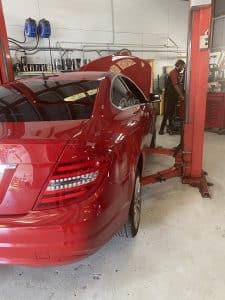
Transmission Service on Mercedes 722.9 transmission
Fresh transmission fluid restores the correct lubrication properties, improves hydraulic performance and removes contaminants that naturally accumulate over time.
A service may be appropriate when:
- Transmission operation is generally normal.
- Fluid is overdue for replacement.
- Minor shift quality concerns are beginning to develop.
- Preventative maintenance is being carried out.
A fluid service will not repair worn clutches, damaged speed sensors or a failed torque converter, but regular servicing can significantly improve transmission life and help prevent more expensive repairs later.
Software Adaptation
The 722.9 transmission continuously adapts its shift strategy to suit component wear and driving style.
Following certain repairs or servicing, the transmission may require adaptation procedures using professional diagnostic equipment.
Adaptation may be appropriate after:
- Transmission servicing.
- Valve body repairs.
- Conductor plate replacement.
- Software updates.
- Transmission rebuilds.
It’s important to understand that resetting adaptations does not repair mechanical faults. It simply allows the transmission control module to relearn clutch filling times and shift characteristics based on the current condition of the transmission.
Conductor Plate Replacement
The conductor plate is one of the most common repair items on the Mercedes 722.9.
When diagnosis confirms faulty speed sensors or conductor plate failure, replacement is often the most effective repair.
Common symptoms include:
- Limp mode.
- Won’t shift past second gear.
- Speed sensor fault codes.
- Transmission warning messages.
- Intermittent shifting problems.
In many cases, replacing the conductor plate restores normal transmission operation without disturbing the internal gearbox.
This is one reason accurate diagnosis is so important. Replacing the entire transmission for a conductor plate fault would be both unnecessary and expensive.
Valve Body Repair
The valve body controls hydraulic pressure throughout the transmission.
As components wear, hydraulic regulation becomes less precise and shift quality begins to suffer.
Valve body repairs may be appropriate when diagnosis identifies:
- Harsh shifts.
- Delayed engagement.
- Pressure control faults.
- Solenoid performance issues.
- Hydraulic wear.
Depending on the condition of the valve body, repairs may involve replacing worn components, repairing hydraulic faults or installing a replacement valve body.
The objective is to restore correct hydraulic pressure before unnecessary clutch wear develops.
Torque Converter Repair
The torque converter is responsible for transmitting engine torque while providing smooth take-off and efficient lock-up during cruising.
Repair or replacement may be recommended when diagnosis confirms:
- Torque converter shudder.
- Lock-up clutch wear.
- P0741 fault codes.
- Excessive converter slip.
- Internal converter damage.
One important point is that a worn torque converter does not automatically mean the transmission requires rebuilding.
If the transmission remains mechanically healthy, replacing or rebuilding the converter may restore normal operation while avoiding unnecessary internal repairs.
Partial Transmission Rebuild
Sometimes diagnosis shows that the transmission has progressed beyond an external repair but does not require a complete overhaul.
In these situations, a partial rebuild may be appropriate.
Examples include:
- Localised clutch damage.
- Internal seal failure.
- Limited contamination.
- Specific internal component wear.
The advantage of a partial rebuild is that repairs can be focused on the affected components while preserving serviceable parts of the transmission.
Whether this is suitable depends entirely on the condition of the gearbox and the amount of internal wear identified during inspection.
Complete Transmission Rebuild
When significant internal wear or damage is present, a complete rebuild becomes the most appropriate repair option.
A rebuild is generally recommended when diagnosis identifies:
- Multiple clutch pack failures.
- Repeated ratio error codes caused by internal wear.
- Heavy contamination.
- Planetary gear damage.
- Major internal hydraulic leakage.
- Extensive mechanical wear.
During a rebuild, the transmission is removed, disassembled, inspected and rebuilt using replacement components where required.
The goal is not simply to replace worn parts but to restore the transmission to reliable operating condition while addressing the root cause of the original failure.
Replacement Transmission
Replacing the entire transmission is sometimes the correct decision, but it should generally be considered only after the available repair options have been evaluated.
Replacement may be appropriate when:
- The existing transmission has suffered catastrophic mechanical failure.
- Internal damage is uneconomical to repair.
- A suitable remanufactured transmission provides better value.
- Genuine replacement units are specified for commercial reasons.
It is important to remember that a replacement transmission still requires correct diagnosis.
If the original fault involved an external component, cooling system issue or electronic control problem, simply installing another transmission may not solve the underlying cause.
Choosing The Right Repair
Every Mercedes 722.9 transmission follows its own repair path.
Some vehicles require nothing more than routine servicing. Others benefit from a conductor plate replacement, valve body repair or torque converter overhaul. Higher mileage transmissions with significant internal wear may require rebuilding or replacement.
The challenge is knowing which category your transmission belongs to.
At Brisbane Tuning & Turbo, our philosophy is straightforward:
- Diagnose the fault.
- Identify the failed system.
- Recommend the most appropriate repair.
- Replace only what genuinely needs replacing.
That approach helps ensure repairs are based on technical evidence rather than assumptions, often saving owners from unnecessary expense while restoring the transmission to reliable operation.
Mercedes 722.9 Repair Costs
One of the first questions we hear from Mercedes owners is:
“How much is this going to cost me?”
It’s a fair question, but unfortunately there isn’t a one-size-fits-all answer.
Two Mercedes vehicles can arrive at the workshop with almost identical symptoms and end up needing completely different repairs. One may require a conductor plate replacement, while the other may need a complete transmission rebuild.
That’s why we always recommend diagnosing the transmission before discussing repair costs.
It usually saves money in the long run and helps avoid replacing parts that aren’t actually causing the problem.
Minor Electronic Repairs
The most economical repairs on the 722.9 transmission usually involve electronic components.
Examples include:
- Conductor plate replacement.
- Speed sensor faults.
- Wiring repairs.
- Electrical connection problems.
- Software-related issues.
Because the transmission itself often remains mechanically healthy, these repairs generally sit at the lower end of the repair cost spectrum.
For many owners, this comes as a pleasant surprise.
We’ve seen plenty of vehicles arrive with the owner convinced the gearbox was finished, only to find the problem was isolated to the conductor plate or another electronic component.
That’s exactly why diagnosis comes before replacement.
Valve Body Repairs
Valve body repairs generally fall into the middle of the repair range.
The final cost depends on several factors, including:
- Overall valve body condition.
- Solenoid performance.
- Hydraulic wear.
- Whether individual components can be repaired.
- Whether a complete valve body replacement is the better option.
The encouraging news is that valve body problems often occur while the mechanical gearbox is still in good condition.
Fixing the hydraulic control system early may prevent further clutch wear and significantly extend the life of the transmission.
Torque Converter Repairs
Torque converter repairs also sit somewhere in the middle of the repair spectrum.
The exact cost depends on whether the converter requires rebuilding or replacement, along with the overall condition of the transmission.
If the converter has been slipping for an extended period, additional work may be required to remove contamination from the transmission and inspect other components for wear.
Think of it this way.
If your torque converter has started dropping crumbs into the transmission, you don’t just vacuum the lounge room and ignore the kitchen.
The rest of the transmission needs to be checked as well.
Fortunately, many torque converter faults are identified before significant secondary damage occurs.
Partial Transmission Rebuilds
Sometimes the transmission doesn’t need a complete overhaul.
Diagnosis may identify wear affecting only one section of the transmission.
In these situations, a partial rebuild can often be a sensible option.
The final cost depends on:
- Which clutch packs require replacement.
- Internal component condition.
- Amount of contamination.
- Additional wear found during inspection.
The advantage is that repairs can be targeted towards the damaged components while retaining serviceable parts of the transmission.
Not every gearbox needs to be rebuilt from front to back simply because one area has developed a fault.
Complete Transmission Rebuilds
A complete rebuild naturally represents the highest repair category.
These repairs are normally recommended when inspection identifies widespread internal wear or mechanical damage.
Typical reasons include:
- Multiple worn clutch packs.
- Internal hydraulic leakage.
- Burnt friction material.
- Hard-part damage.
- Extensive contamination.
- Repeated ratio monitoring faults.
A proper rebuild involves far more than replacing a few worn components.
The transmission is completely dismantled, inspected, cleaned, measured and reassembled using new components where required.
The objective is to restore the transmission to reliable long-term operation rather than simply getting it moving again.
Replacement Transmissions
In some situations, fitting a replacement transmission may be the most practical solution.
This usually depends on:
- Availability of replacement units.
- Overall transmission condition.
- Vehicle age.
- Customer budget.
- Commercial considerations.
However, replacing the transmission should never become the default solution.
Installing another gearbox without understanding why the original transmission failed can sometimes lead to exactly the same problem appearing again.
The replacement transmission deserves the same careful diagnosis as the original one.
What Influences Repair Costs?
Several factors influence the final repair cost.
Vehicle model.
Transmission variant.
Mileage.
Service history.
Fluid condition.
Extent of internal wear.
Availability of replacement parts.
Whether contamination has spread through the transmission.
The earlier a fault is diagnosed, the more repair options are usually available.
A small electronic fault caught early is often far less expensive than waiting until it creates secondary hydraulic or mechanical damage.
The Cheapest Repair Is Usually The Correct Diagnosis
One thing we’ve learned over many years of working on automatic transmissions is this:
The cheapest repair isn’t always the one with the lowest invoice.
It’s the one that fixes the right problem the first time.
Replacing a conductor plate when the transmission actually needs a valve body won’t save money.
Replacing the valve body when the torque converter is failing won’t save money either.
Likewise, rebuilding an entire transmission when the fault is isolated to the conductor plate simply creates unnecessary expense.
At Brisbane Tuning & Turbo, we believe repair costs should always follow diagnosis—not assumptions.
Our goal is to identify the actual failure, explain the available repair options and recommend the solution that best suits the condition of your transmission.
After all, your Mercedes doesn’t know what your budget is. It only knows what’s actually wrong with it. Our job is to find that out before recommending how to fix it.
Mercedes 722.9 Maintenance
If there’s one thing we’ve learnt over the years working on automatic transmissions, it’s this:
Gearboxes don’t usually wake up one morning and decide they’ve had enough.
Most transmission problems develop gradually. A little extra heat here, slightly overdue fluid there, a small shudder that’s ignored for six months… eventually all those little things add up.
The good news is that the Mercedes-Benz 722.9 is a very capable transmission when it’s looked after properly. A bit of preventative maintenance now can often save a much bigger repair bill later.
Don’t Believe In “Lifetime” Fluid
Let’s start with one of the biggest myths.
Mercedes originally described the transmission fluid as “lifetime” in some markets.
The obvious question is… whose lifetime?
The transmission’s?
The car’s?
Or the marketing department’s?
From a workshop perspective, there is no such thing as lifetime transmission fluid.
Transmission fluid works incredibly hard. It lubricates bearings, cools internal components, transfers hydraulic pressure and controls clutch engagement—all while operating in a hot environment.
Over time it gradually loses its protective properties and becomes contaminated with normal wear material.
Fresh fluid is much cheaper than rebuilding a transmission.
How Often Should The Fluid Be Changed?
There isn’t a single interval that suits every vehicle.
A Mercedes that spends its life cruising on the motorway has a much easier life than one that spends every weekday crawling through city traffic.
As a general guide, we recommend viewing transmission servicing as preventative maintenance rather than waiting until problems appear.
If your Mercedes regularly tows, operates in hot Australian conditions or spends a lot of time in stop-start traffic, more frequent servicing is usually a good investment.
The important thing is consistency.
Regular servicing is far kinder to a transmission than ignoring it for years and hoping for the best.
Heat Is The Enemy
If automatic transmissions had a “most wanted” list, heat would probably be sitting at number one.
High operating temperatures accelerate fluid breakdown, increase clutch wear and place extra stress on seals, valve bodies and the torque converter.
You won’t always notice excessive heat while driving.
The transmission simply continues working… until one day it doesn’t.
Anything that causes excessive slipping—whether it’s a worn torque converter, low fluid quality or internal wear—creates additional heat.
The earlier these issues are diagnosed, the less chance they have to affect the rest of the transmission.
Driving Habits Matter
The way a vehicle is driven has a direct influence on transmission life.
Most owners don’t need to drive like they’re carrying a tray of coffees, but a little mechanical sympathy goes a long way.
Avoid repeated full-throttle launches unless you enjoy keeping transmission rebuilders employed.
Allow the transmission to warm up naturally before demanding maximum performance.
When towing, remember the transmission is working much harder than usual.
If you notice shuddering, slipping or delayed gear engagement, don’t simply turn the radio up and hope it disappears.
Unfortunately, automatic transmissions rarely repair themselves while you’re listening to your favourite song.
Don’t Ignore Early Warning Signs
The 722.9 is actually quite good at telling you something isn’t right.
Common warning signs include:
- Occasional harsh shifts.
- Delayed engagement into Drive or Reverse.
- Shudder at highway speed.
- Transmission warning messages.
- Limp mode.
- Unusual noises.
- Gear changes that suddenly feel different.
Many of these faults begin as relatively small issues involving the conductor plate, valve body or torque converter.
Left long enough, they can develop into much more expensive internal repairs.
Early diagnosis often provides more repair options.
Preventative Servicing Makes Sense
Preventative servicing isn’t just about replacing transmission fluid.
It’s also an opportunity to assess the overall health of the transmission.
During servicing, a specialist workshop can often identify:
- Fluid condition.
- Early contamination.
- Developing shift quality problems.
- Stored fault codes.
- Transmission adaptation issues.
- Signs of valve body wear.
- Early torque converter concerns.
Finding a problem early is usually far better than discovering it after the transmission has already entered limp mode on the side of the Pacific Motorway.
A Little Maintenance Goes A Long Way
The Mercedes 722.9 is a sophisticated transmission, but it doesn’t ask for miracles.
Clean fluid.
Reasonable operating temperatures.
Regular servicing.
Prompt attention when something changes.
Those four things alone can make a significant difference to the life of the transmission.
At Brisbane Tuning & Turbo, we’ve seen well-maintained 722.9 transmissions travel hundreds of thousands of kilometres while still delivering smooth, reliable operation.
The secret usually isn’t luck.
It’s simply that someone looked after the transmission before it asked for expensive attention.
As we often tell customers, transmission maintenance is a bit like going to the dentist. A regular check-up is usually a lot cheaper—and far less painful—than waiting until something starts screaming.
Frequently Asked Questions
Can I drive my Mercedes if the transmission is in limp mode?
Limp mode is designed to protect the transmission from further damage. While the vehicle may still be drivable for a short distance, we don’t recommend continuing to drive any further than necessary. The longer the underlying fault is ignored, the greater the risk of creating additional damage.
Does limp mode always mean I need a new transmission?
No. In fact, many Mercedes 722.9 transmissions enter limp mode because of repairable faults such as a faulty conductor plate, speed sensor or valve body problem. Proper diagnosis is required before deciding on the correct repair.
What is a conductor plate?
The conductor plate is an electronic assembly mounted on top of the valve body inside the transmission. It contains several internal speed sensors and communicates critical operating information to the transmission control module.
Should I replace the conductor plate as soon as it fails?
If testing confirms the conductor plate is faulty, replacement is usually the correct repair. However, we don’t recommend replacing it based solely on a fault code without first confirming the diagnosis.
What are the most common Mercedes 722.9 fault codes?
Some of the most common codes include P0715, P0717, P0720, P0722, P0741, P0730–P0736 and several Mercedes-specific Y3/8 speed sensor faults. Each code points towards a particular system but should always be interpreted alongside live diagnostic data.
Why won’t my Mercedes shift past second gear?
This is commonly associated with limp mode and is often caused by conductor plate or speed sensor faults. However, valve body problems and certain internal faults can produce similar symptoms.
Why is my Mercedes shuddering at highway speed?
A vibration or shudder under light throttle at approximately 80–100 km/h is commonly associated with torque converter lock-up clutch wear. Accurate diagnosis is required to confirm the cause before repairs are recommended.
Does P0741 always mean the torque converter has failed?
Not always. P0741 indicates that the torque converter lock-up clutch is not operating as expected. While a worn converter is a common cause, valve body faults and hydraulic pressure problems can produce similar results.
Can incorrect gear ratio codes be repaired?
Yes, depending on the cause. Ratio monitoring codes can result from hydraulic pressure loss, valve body wear or internal clutch wear. Some cases require rebuilding, while others can be repaired without replacing the complete transmission.
Does harsh shifting always mean the transmission is worn out?
No. Harsh shifts may be caused by valve body wear, pressure regulation issues, adaptation values, fluid condition or electronic faults. Internal transmission wear is only one possible cause.
Can a valve body be repaired?
In many cases, yes. Depending on its condition, the valve body may be repaired, rebuilt or replaced. The correct option depends on the results of diagnosis.
How long does a Mercedes 722.9 transmission usually last?
With regular servicing and sensible driving habits, many 722.9 transmissions exceed 250,000 kilometres before requiring major internal repairs. Maintenance history is often more important than vehicle age.
Is Mercedes “lifetime” transmission fluid really lifetime?
From a workshop perspective, no. Transmission fluid deteriorates with age, heat and normal wear. Regular servicing helps maintain hydraulic performance and extend transmission life.
How often should the transmission be serviced?
Service intervals depend on how the vehicle is driven. Vehicles used for towing, frequent stop-start driving or operating in hot Australian conditions generally benefit from more frequent transmission servicing than vehicles used mainly for highway driving.
Can dirty transmission fluid cause problems?
Yes. Old or contaminated fluid affects lubrication, hydraulic pressure and clutch operation. While changing the fluid won’t repair worn components, it plays an important role in preventing premature wear.
How long does it take to diagnose a Mercedes transmission?
That depends on the fault. Some issues can be identified relatively quickly, while more complex hydraulic or intermittent faults require additional testing, road driving and live data analysis.
How long does a conductor plate replacement take?
The exact repair time depends on the vehicle model and workshop schedule. Because the conductor plate is located inside the transmission, the work is more involved than simply replacing an external sensor.
How long does a transmission rebuild take?
Repair time varies depending on parts availability, the extent of internal damage and workshop workload. A quality rebuild involves careful inspection, measurement and testing rather than simply replacing worn parts.
Is it worth rebuilding a Mercedes 722.9 transmission?
In many cases, yes. If the vehicle is otherwise in good condition, rebuilding the original transmission can provide many years of reliable service while retaining the factory unit.
Should I replace the transmission instead of rebuilding it?
That depends on the condition of the existing transmission, the availability of replacement units and the overall economics of the repair. A proper diagnosis helps determine which option offers the best value.
Can a transmission warning message be ignored?
We don’t recommend it. The warning message means the transmission control system has detected an abnormal operating condition. Early diagnosis often prevents more extensive damage.
Will clearing the fault codes fix the transmission?
No. Clearing the codes only removes the stored information from the control module. If the underlying fault remains, the code will usually return once the transmission detects the problem again.
Can I keep driving if the transmission is slipping?
It’s best not to. Continued slipping generates heat and accelerates clutch wear. What starts as a repairable issue can eventually develop into a complete rebuild if ignored.
What makes Brisbane Tuning & Turbo different?
Our approach is based on diagnosis before replacement. Rather than assuming every Mercedes transmission needs rebuilding, we assess the electronic system, valve body, torque converter and internal gearbox before recommending repairs. This allows us to identify the actual cause of the problem and recommend the repair that best matches the condition of the transmission.
What’s the first step if I think my Mercedes transmission has a problem?
Book a professional transmission diagnostic as soon as possible. Identifying the fault early often provides more repair options, reduces the risk of secondary damage and helps avoid unnecessary replacement of parts that are still working correctly.
Why Brisbane Tuning & Turbo?
Choosing a workshop for Mercedes 722.9 transmission repairs is not just about finding someone who can remove and refit a gearbox. Plenty of workshops can do that. The real question is whether the workshop can correctly identify what has failed before the expensive parts start getting ordered.
At Brisbane Tuning & Turbo, our approach is simple: diagnose the problem properly, classify the failure, and recommend the repair that matches the actual condition of the transmission.
That matters because the 722.9 can be a tricky transmission to diagnose. A Mercedes stuck in limp mode may have a conductor plate fault, a speed sensor issue, valve body wear, torque converter shudder or internal clutch damage. The symptoms can overlap. The fault codes can point in a direction without telling the whole story. If the diagnosis is rushed, the repair can quickly become expensive guesswork.
And guesswork is not a repair strategy. It is more like buying lotto tickets, except the customer pays for every losing number.
Real Workshop Experience
BTT is not writing about Mercedes transmissions from theory alone. We diagnose, repair, remove, inspect and rebuild automatic transmissions in a real workshop environment. That means we see how faults behave in actual vehicles, under real driving conditions, in Australian heat, traffic and load.
That experience matters because many transmission problems do not show themselves while the vehicle is sitting still. Some faults only appear hot. Some only appear under light throttle. Some happen during lock-up. Some happen on a particular shift. Some disappear after the key is cycled and return when the customer is already halfway home and very unimpressed.
A proper workshop diagnosis needs to account for all of that.
Transmission Diagnostics
Our diagnostic process is built around understanding the whole transmission system. We look at symptoms, fault codes, live data, adaptation values, road test behaviour, fluid condition and the likely failure stage.
The aim is not simply to scan the vehicle and print a list of codes. A scan tool is useful, but it is not a crystal ball. The value is in interpreting the information correctly.
That is especially important on the 722.9 because the same symptom can come from different systems. Harsh shifting may be valve body related, but it may also involve adaptations, fluid condition or internal wear. Shudder may point toward the torque converter, but hydraulic control still needs to be considered. Limp mode may be electronic, hydraulic or mechanical.
Conductor Plate Repairs
Conductor plate and speed sensor faults are among the most common 722.9 problems. These faults can cause limp mode, no upshifts, warning messages and codes such as P0715, P0717, P0720, P0722, P0793 and P2767.
When diagnosis confirms the conductor plate is the issue, this can often be repaired without rebuilding the entire transmission. That is good news for the owner because the mechanical gearbox may still be healthy.
Valve Body Capability
The valve body is the hydraulic control centre of the transmission. When it wears, pressure regulation becomes inconsistent and shift quality suffers.
At BTT, valve body faults are treated as hydraulic problems, not just “it shifts funny” problems. We assess whether the issue is pressure control, solenoid performance, valve body wear, fluid condition or internal transmission damage.
This is where specialist diagnosis makes a real difference.
Torque Converter Repairs
Torque converter faults often show up as shudder, vibration, delayed lock-up or P0741-related issues. These faults can be very annoying to drive with and can create extra heat if ignored.
The important point is that a torque converter problem does not automatically mean the whole transmission needs rebuilding. If caught early and confirmed properly, the converter can often be repaired or replaced as part of a targeted repair strategy.
Rebuild Capability
Sometimes the transmission does need to come out. If there is internal clutch damage, repeated ratio errors, heavy contamination, failed hard parts or major mechanical wear, a rebuild may be the correct repair.
Because BTT has rebuild capability, we are not limited to one answer. We can assess whether the vehicle needs a conductor plate, valve body, torque converter, partial rebuild or complete rebuild.
That gives the customer a clearer repair pathway rather than a one-size-fits-all recommendation.
Diagnose First, Repair Second
Our philosophy is straightforward.
We do not want to replace a transmission because one fault code looked scary. We do not want to fit a valve body when the torque converter is the actual problem. We do not want to rebuild a gearbox when a conductor plate repair would solve it.
The goal is to repair the correct system the first time.
That is why Brisbane Tuning & Turbo approaches the Mercedes 722.9 with a structured diagnostic process, real workshop experience and the capability to carry out the repair once the fault is properly identified.
In simple terms: we do not just ask, “What part can we replace?”
We ask, “What has actually failed, why did it fail, and what is the most sensible way to fix it?”
What’s The Most Likely Repair For Your Mercedes?
If you’ve read this guide from start to finish, you’ll probably realise something important.
Mercedes 722.9 transmission problems are rarely random.
Most faults follow predictable patterns, and those patterns usually point towards one of four repair pathways.
The challenge is identifying which pathway your transmission belongs to before replacing parts or authorising major repairs.
At Brisbane Tuning & Turbo, that’s exactly what our diagnostic process is designed to do.
Your Mercedes Is Stuck In Limp Mode
If your Mercedes has suddenly become stuck in one gear, won’t shift properly or displays a transmission warning message, don’t automatically assume the gearbox has failed.
More often than not, we begin by investigating the electronic control system.
Common possibilities include:
- Conductor plate failure.
- Internal speed sensor faults.
- VGS communication faults.
- Wiring or electrical issues.
These faults commonly trigger codes such as P0715, P0717, P0720 or P0722.
The encouraging news is that many Stage 1 faults are repairable without rebuilding the transmission.
Our first objective is always to determine whether the problem is electronic before considering more extensive repairs.
Your Mercedes Won’t Shift Properly
If the transmission shifts harshly, hesitates between gears or refuses to change gears smoothly, we usually turn our attention to the hydraulic control system.
Possible causes include:
- Valve body wear.
- Pressure regulation problems.
- Solenoid performance issues.
- Hydraulic leakage.
- Transmission adaptation concerns.
These are Stage 2 faults in our assessment model.
Again, this does not automatically mean the transmission requires rebuilding.
Many hydraulic faults can be repaired once the underlying cause has been correctly identified.
Your Mercedes Shudders At Highway Speed
A shudder or vibration between approximately 80 and 100 km/h is one of the most recognisable Mercedes 722.9 symptoms.
In many cases, our attention turns towards the torque converter.
Common indicators include:
- P0741 fault codes.
- Lock-up clutch slip.
- Vibration under light throttle.
- Delayed converter lock-up.
The important thing to understand is that a torque converter fault is not necessarily an internal transmission failure.
When diagnosed early, many Stage 3 faults can be repaired before they begin affecting the rest of the transmission.
Your Mercedes Is Slipping Or Showing Ratio Error Codes
If the transmission is slipping under load, repeatedly storing ratio monitoring faults or losing drive in one or more gears, the likelihood of internal transmission wear increases.
Common indicators include:
- P0730.
- P0731.
- P0732.
- P0733.
- P0734.
- P0735.
- P0736.
These faults may indicate clutch wear, internal hydraulic leakage or mechanical component damage.
At this point, a transmission rebuild may become the most appropriate repair.
However, even here we avoid assumptions.
Ratio errors can also be produced by hydraulic pressure problems, which is why proper diagnosis remains essential.
One Symptom Doesn’t Always Mean One Fault
One of the biggest lessons we’ve learned working on Mercedes transmissions is that similar symptoms can have completely different causes.
For example:
A vehicle stuck in limp mode may require a conductor plate.
Another may need valve body repairs.
Another may have a control module fault.
Another may require an internal rebuild.
The symptoms can be almost identical.
The repair pathways are completely different.
That is why we avoid diagnosing transmissions based on symptoms alone.
Our Philosophy Is Simple
Rather than asking:
“What part should we replace?”
We ask:
“Which system has failed?”
That question changes everything.
Instead of replacing expensive components based on guesswork, we work through the transmission logically.
Is the problem electronic?
Is it hydraulic?
Is it the torque converter?
Or is there genuine internal mechanical wear?
Once we know the answer, the repair usually becomes much clearer.
The Right Diagnosis Usually Saves Money
Over the years we’ve seen customers arrive expecting the worst.
Some have already been told they need a replacement transmission.
Others have spent money replacing parts that were never faulty in the first place.
Our experience has shown that accurate diagnosis often provides more repair options than owners expect.
Sometimes the answer is a conductor plate.
Sometimes it’s a valve body.
Sometimes it’s a torque converter.
Sometimes the transmission genuinely needs rebuilding.
The important thing is reaching that conclusion through testing rather than assumptions.
The Next Step
If your Mercedes-Benz 722.9 transmission is showing symptoms such as limp mode, harsh shifting, delayed engagement, shudder, slipping or transmission warning messages, the best place to start is with a professional transmission diagnosis.
At Brisbane Tuning & Turbo, our diagnostic process is designed to identify the actual failure before recommending repairs.
That means you’re not paying for unnecessary parts or guessing which component might be causing the problem.
You’re investing in understanding what your transmission actually needs.
Because in our experience, the correct diagnosis isn’t just the first step in repairing a Mercedes transmission.
It’s usually the most valuable part of the entire repair.