6R80 Transmission Problems Ford Ranger PX1 to PX3
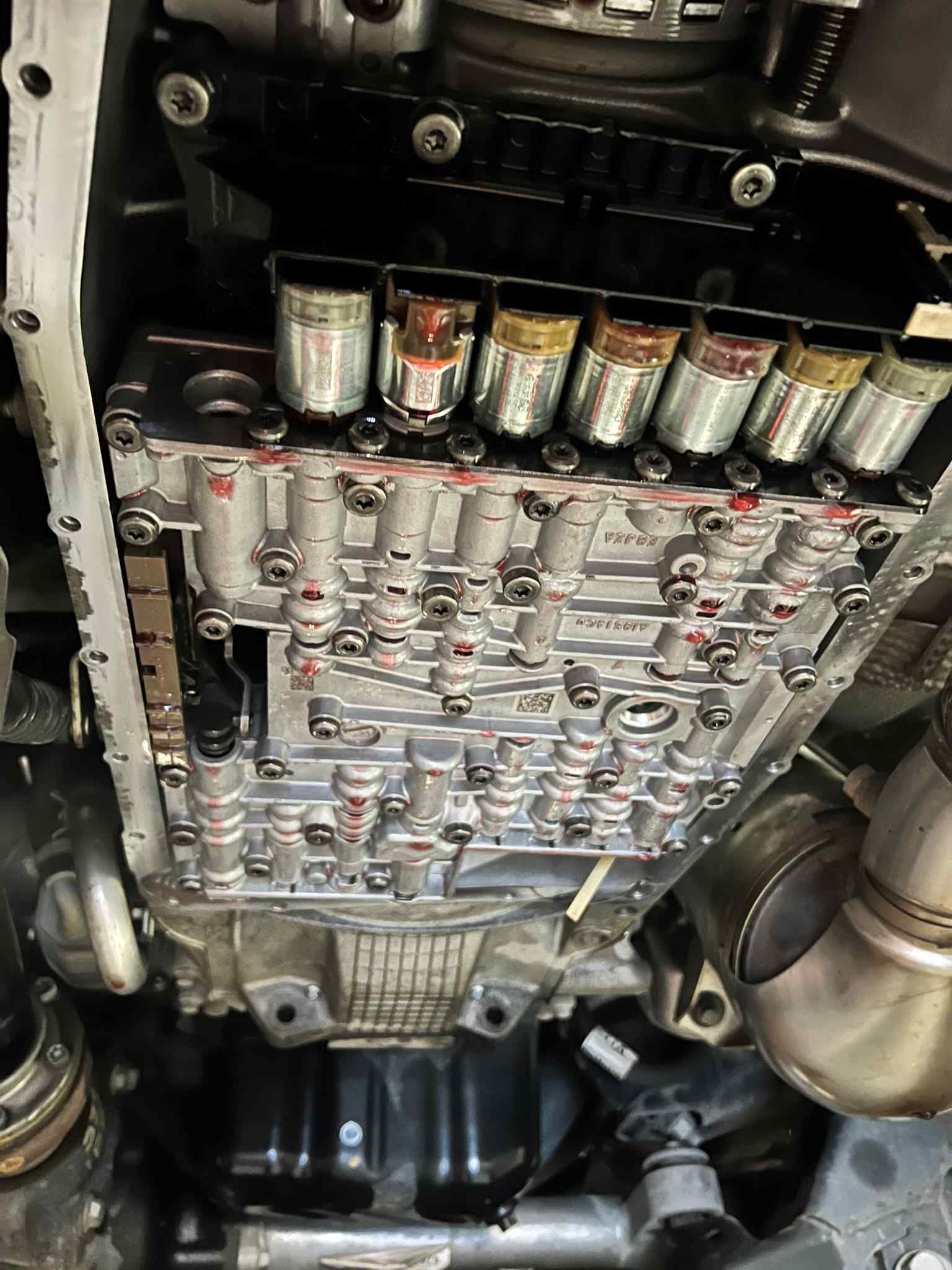
6R80 Transmission Problems Ford Ranger PX1 to PX3
6R80 Transmission Problems – Ford Ranger PX1 to PX3
If your Ford Ranger is flaring between gears, slipping when towing, or slamming into reverse — you’re likely dealing with early 6R80 transmission failure.
Left unchecked, this can turn into a $6,000+ rebuild.
The good news: most of these issues can be diagnosed and fixed early — if you catch them in time.
This article was updated on the 12nd of July 2026. We aim to provide you with helpful information about the 6R80 automatic transmission. Please check this article for your information: 6R80 Transmission Technical Hub – Diagnostics, Valve Body Strategy and Common Failures.
If you own a Ford Ranger PX1, PX2 or early PX3 and the automatic transmission feels off—maybe it flares between gears, slams into reverse, or just won’t hold lock-up when towing—chances are your 6R80 is telling you it’s time for a proper diagnosis. Don’t panic. You’re not the only one. This six-speed gearbox is everywhere in Queensland and handles the daily abuse better than most—but when it starts to fail, it usually gives clear warning signs.
Let’s run through the known 6R80 Transmission Problems, real-world causes, and how to fix it the right way before you’re shopping for a second-hand box that might be just as cooked.
The most common 6R80 problems addressed by this article
Torque converter clutch wear (P0741, P2757)
Valve body hydraulic pressure loss
Harsh Reverse or Drive engagement
Shift flare between gears
Overheating during towing
Early diagnosis can often avoid a full rebuild
What Is the 6R80 and Why Does It Matter?
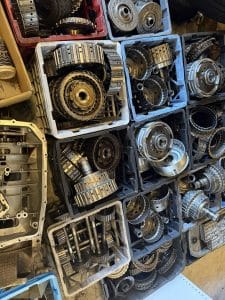
6R80 Spare Parts
The 6R80 is a six-speed automatic based on the ZF 6HP26, used in Ford Ranger PX1–PX3 (2011–2021) and Everest models. It’s tough, smooth when healthy, and takes a beating—especially in utes doing workhorse duty with towing, tradie gear, or long-haul touring loads.
In Australia, 6R80 has two big enemies: heat and neglect. Combine towing in 35°C with a blocked cooler and 200,000 km old fluid, and you’re just asking for converter slip and shift flare.
Why the 6R80 Is a Good Transmission
One of the biggest misconceptions on the internet is that the Ford 6R80 is a “bad transmission.”
In reality, the opposite is true.
The 6R80 is based on ZF engineering principles and was designed to handle considerably more torque than many other six-speed automatics available at the time. It combines electronic control with a strong mechanical design, allowing smooth shifting, good fuel economy and excellent towing capability when operating correctly.
This is one of the reasons Ford used the transmission across Ranger, Everest, F-150 and several other vehicles around the world.
If the transmission was fundamentally flawed, it simply would not have achieved that level of production.
What we commonly see in Australia is not poor design.
We see transmissions that have accumulated years of towing, heavy loads, high ambient temperatures and ageing transmission fluid.
Those operating conditions place enormous demands on the hydraulic system, torque converter and valve body.
Eventually, wear begins to appear.
Understanding that difference is important.
Most 6R80 failures are not caused by a single catastrophic event.
They develop gradually as hydraulic efficiency decreases over time.
That is also why many transmissions can be repaired successfully if diagnosed before significant internal clutch damage occurs.
How the 6R80 Transmission Works
The 6R80 uses a combination of hydraulic pressure, clutch packs, and a torque converter to transfer power through the gears.
At cruising speed, the torque converter locks up to improve efficiency and reduce slip. This lock-up function is one of the most critical — and most common failure points.
The transmission also relies on precise pressure control through the valve body to apply clutches correctly. When pressure becomes unstable, shifts become inconsistent, harsh, or delayed.
Understanding this explains why symptoms like flare, slip, and harsh shifting often appear together.
Why Hydraulic Pressure Is Everything in a 6R80 Transmission
One of the biggest misconceptions about automatic transmissions is that they simply “change gears.”
In reality, the 6R80 is constantly controlling hydraulic pressure hundreds of times every minute.
Every gear change depends on hydraulic pressure being delivered to the correct clutch at precisely the correct time.
Inside the valve body are multiple pressure control solenoids. These receive commands from the Transmission Control Module (TCM) and regulate the oil pressure applied to individual clutch packs.
If pressure is too low, the clutch applies slowly.
If pressure is too high, the clutch applies harshly.
If pressure leaks internally through worn valve body bores or damaged separator plate gaskets, the transmission may still change gears—but not with the correct timing.
This is why many owners first notice only a slight flare between gears.
The transmission is already losing hydraulic efficiency long before it stores a fault code.
The adaptive learning system attempts to compensate by increasing clutch fill times and modifying pressure commands. Eventually, the adaptations reach their limit, and the symptoms become obvious.
Understanding hydraulic pressure explains why replacing random parts rarely fixes a 6R80.
Successful repairs begin by identifying where hydraulic pressure is being lost.
In our experience, this is one of the most important parts of diagnosing Ford Ranger transmission problems correctly.
Why Adaptive Learning Matters
One feature that often confuses Ford Ranger owners is the adaptive learning system built into the 6R80 transmission.
Unlike older automatic transmissions that always applied the same hydraulic pressure, the 6R80 constantly monitors how quickly each clutch engages during every gear change.
As the transmission ages, clutch clearances change slightly.
Valve body components wear.
Fluid characteristics gradually change.
Rather than allowing shift quality to deteriorate immediately, the Transmission Control Module continuously adjusts clutch fill times and pressure commands to compensate for these small changes.
This process is known as adaptive learning.
Many scan tools allow these adaptive values to be reset.
However, resetting adaptations does not repair worn components.
If hydraulic pressure is leaking through a worn valve body or the torque converter clutch is already slipping, the transmission will simply begin relearning those worn conditions again.
This is why adaptation resets sometimes appear to improve shifting for a short period before the original symptoms gradually return.
For an experienced transmission specialist, adaptive values are not simply numbers.
They provide valuable diagnostic evidence showing how hard the transmission has been working to compensate for internal wear.
Top 5 Signs Your 6R80 Is on the Way Out
1. Shifts Feel Sloppy or Delayed
Lag when upshifting or the classic 2–3 flare is your first red flag.
2. Harsh Engagement into Reverse or Drive
If reverse feels like it’s “clunking” in, stop pretending it’s normal.
3. Towing = Transmission Limp Mode
Nothing kills a road trip faster than losing 5th and 6th up Cunningham’s Gap.
4. Lock-Up Drops In and Out (Highway)
This is classic torque converter clutch slip, often tied to P0741 or P2757 fault codes.
5. Fluid Looks Burnt or You Can Smell It
Chocolate milkshake? Time to stop driving and start diagnosing.
Stages of 6R80 Transmission Failure
Stage 1: slight flare or delay
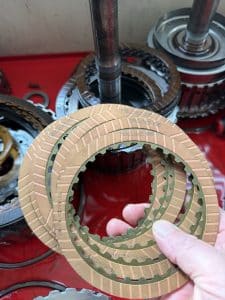
6R80 Clutch Pack Comparison
Stage 2: harsh shifts / inconsistent lock-up
Stage 3: slip under load
Stage 4: overheating and limp mode
Stage 5: full rebuild required
The difference between a repair and a rebuild is timing — not luck.
Why Early Diagnosis Saves Thousands
One of the most expensive mistakes we see is waiting until the transmission can no longer drive normally before seeking advice.
Automatic transmissions usually don’t fail overnight.
Instead, they deteriorate progressively.
A slight flare between second and third gear may continue for months.
Converter lock-up may occasionally disengage during highway driving.
Reverse may become slightly harsher every few weeks.
Because these changes happen gradually, many owners simply adapt their driving style without realising the transmission is warning them.
Unfortunately, the transmission continues producing heat every time internal slip occurs.
That heat accelerates wear of clutch materials, valve body components and the torque converter clutch.
What may have started as a repair involving a valve body or torque converter can eventually contaminate the entire transmission with friction material.
By the time significant clutch debris is circulating through the hydraulic system, repair options become much more limited.
Early diagnosis is often the difference between replacing one component and rebuilding the entire transmission.
For that reason we encourage owners to investigate even minor transmission changes before they become major failures.
Common 6R80 Transmission Problems (PX1 to PX3)
Even though Ford didn’t reinvent the wheel across PX1, PX2 and PX3, they did tweak a few parts. But most issues remain the same across all three variants:
Torque Converter
Probably the number one failure point we see at BTT. Over time, the clutch lining wears, leading to internal slip. You’ll feel it as revs flaring under light load, especially in top gear. Expect P0741 or P2757 codes if it’s bad enough.
Valve Body and Solenoids
When your Ranger downshifts too hard or gets stuck in the wrong gear, don’t blame the TCM straight away. Worn valve body bores and sticky solenoids cause a lot of dramas. Often misdiagnosed as needing a full rebuild.
Separator Plate & Gaskets
These sit between the valve body halves. One warped gasket or a cracked plate and you’ll chase shift faults for weeks. Cheap parts. Big consequences.
Transmission Overheating
The factory cooler is fine for stock utes, but add a 2.5-tonne caravan or a tune and temps skyrocket. Overheated fluid kills converters and solenoids silently.
Diagnostics That Actually Work.
Why Fault Codes Don’t Tell the Whole Story
One of the most common questions we hear is:
“My scan tool says there are no transmission fault codes. Does that mean the transmission is healthy?”
Unfortunately, the answer is no.
Fault codes are only generated when the transmission control module detects that a parameter has exceeded its programmed limits.
Many developing transmission problems never cross those thresholds.
A torque converter may already be slipping slightly.
A valve body may already be losing hydraulic pressure.
Adaptive values may already be approaching their limits.
Yet no warning light appears.
This is why professional diagnosis relies heavily on live data rather than stored fault codes alone.
During testing, we monitor parameters such as converter slip speed, commanded gear, actual gear, turbine speed, transmission temperature, line pressure and adaptive clutch values.
Watching these values under real driving load often reveals problems long before a fault code is stored.
This allows repairs to be planned earlier, reducing the likelihood of major internal damage.
What Transmission Fluid Can Tell You
Transmission fluid condition is one of the clearest indicators of internal wear.
– Clean fluid → healthy system or early stage (consider a cooler bypass)
– Dark or burnt fluid → heat damage (signs of valve body damage if too dark with clutch material signs of a damage torque converter)
– Metallic particles → internal clutch wear
Fluid inspection alone is not enough — but combined with proper testing, it gives a strong indication of transmission condition.
Fluid inspection should never be used in isolation.
A transmission with relatively clean fluid may still have developing torque converter or valve body problems, while heavily discoloured fluid does not automatically mean a complete rebuild is required.
The condition of the fluid must always be interpreted alongside live scan data, hydraulic behaviour, fault codes and the vehicle’s driving symptoms.
Looking at all of these factors together provides a far more accurate picture than relying on any single test.
Why Cooling Matters in 6R80 Transmissions
The factory transmission cooler is designed for standard driving conditions.
When you add towing, tuning, or heavy loads, heat generation increases significantly.
If heat is not controlled:
– fluid breaks down faster
– torque converter slip increases
– internal wear accelerates
This is why many Rangers used for towing develop transmission problems earlier than expected.
Why Heat Is the Biggest Enemy of the 6R80
Heat is responsible for a surprisingly large percentage of automatic transmission failures.
Transmission fluid does far more than lubricate moving parts.
It also transfers hydraulic pressure, cools internal components and allows clutch packs to engage smoothly.
As temperature increases, the fluid gradually loses viscosity.
The thinner the fluid becomes, the more difficult it is to maintain precise hydraulic pressure throughout the valve body.
This creates a cycle that typically accelerates wear.
Lower pressure allows more clutch slip.
More slip creates more heat.
More heat causes further pressure loss.
The process feeds itself until symptoms become impossible to ignore.
Vehicles used for towing caravans, carrying heavy loads or operating in Queensland’s summer temperatures place considerably more thermal stress on the transmission than vehicles used only for commuting.
This doesn’t mean towing damages every 6R80.
It simply means cooling becomes much more important if the vehicle regularly operates under heavy load.
Understanding Transmission Temperatures
Heat itself does not instantly destroy an automatic transmission.
The problem is what excessive temperature does to the transmission fluid.
Transmission fluid performs several important functions simultaneously.
It lubricates moving components, transfers hydraulic pressure, cools internal parts and allows clutch packs to engage smoothly.
As temperature rises, the fluid gradually becomes thinner.
Lower viscosity makes it increasingly difficult for the valve body to maintain stable hydraulic pressure throughout the transmission.
Under normal driving conditions, many 6R80 transmissions operate between approximately 70°C and 90°C.
Vehicles that regularly tow heavy trailers or caravans may operate between 90°C and 105°C for extended periods.
Once temperatures climb beyond this range, fluid deterioration accelerates.
Higher temperatures increase oxidation, reduce lubrication performance and make hydraulic pressure more difficult to control.
The result is often increased torque converter slip, harsher gear changes and faster wear of clutch materials.
For vehicles that regularly tow, transmission cooling should be viewed as preventative maintenance rather than an optional accessory.
Valve Body Wear
The valve body is the hydraulic control centre of the 6R80 transmission.
Inside it are precisely machined passages and valves that direct hydraulic pressure to the correct clutch packs during every gear change.
Over time, constant valve movement can gradually wear the aluminium bores inside the valve body.
Although this wear may only measure a few hundredths of a millimetre, it allows hydraulic pressure to leak internally.
The transmission may still change gears, but clutch application becomes slower and less consistent.
Drivers often notice shift flare, delayed engagement or harsh shifting long before a fault code appears.
Solenoid Problems
The pressure control solenoids regulate hydraulic pressure throughout the transmission.
These electronically controlled valves receive commands from the Transmission Control Module hundreds of times every minute.
Electrical faults, contamination or internal wear can prevent solenoids from controlling pressure accurately.
Because valve body wear and solenoid faults often produce similar symptoms, replacing solenoids without proper diagnosis does not always solve the problem.
A complete hydraulic assessment is usually required to identify the true cause.
Common 6R80 Fault Codes
P0741 Torque Converter Clutch Performance
Indicates the torque converter is not locking properly. Usually felt as shudder or RPM fluctuation at steady speed, especially under light load or highway driving.
P2757 Torque Converter Clutch Pressure Control Solenoid
Related to lock-up control issues. Often appears with slipping under load or overheating during towing.
P0776 Pressure Control Solenoid B Performance
Causes inconsistent or harsh shifting due to unstable hydraulic pressure inside the transmission.
P2714 Pressure Control Solenoid D Performance
Can lead to delayed engagement or incorrect gear selection, often misdiagnosed as a major mechanical failure.
Fault codes alone don’t confirm the exact failure — they must be verified under load with proper diagnostic testing.
What We See in Brisbane
At Brisbane Tuning & Turbo, we see these issues weekly in Rangers used for towing and heavy-duty work across Queensland.
Why 6R80 Transmissions Fail
– heat from towing
– torque converter wear
– valve body pressure loss
– fluid degradation
– lack of servicing
What Happens If You Ignore It
– flare becomes constant
– slipping increases
– heat builds
– clutch damage spreads
Result: repair → rebuild
Here’s how we sort the guesswork from real faults at Brisbane Tuning & Turbo:
1. Full Scan Tool Analysis (Autel + Forscan+Snap-On “Trititon”)
We don’t just read the codes—we check live solenoid states, slip %, and load data.
2. Dyno Verification or Road Test
Simulated road load. Lets us see real-time converter slip, gear changes, and lock-up behaviour.
3. Fluid Condition Check
Burnt or varnished fluid tells us the history. Shiny bits in the pan? That’s clutch debris. Metal from failing torque converter.
4. Wiring and Loom Check (PX1–PX2)
Especially relevant on earlier PX1s. A cracked plug can throw all the wrong codes.
What You Get After Your Diagnostic
– confirmed fault (converter/valve body / both)
– repair vs rebuild decision
– exact cost
Repair Options: What You’re Looking At
Option 1 – Valve Body Only
Fixes shift flare, limp mode, harsh downshifts
Reconditioned or upgraded
$3,250 fitted (incl fluid + programming & test)
Option 2 – TQ+ Package (Converter + Dyno-Tuned Lock-Up Strategy)
Fixes highway slip, P0741, P2757
Includes upgraded converter and tuning
$4100 depending on upgrades
Option 3 – Complete Rebuild (only if it’s cooked)
Full teardown, clutches, frictions, solenoids
New converter, cooler flush
Starts from $8,200+ (22 hours labour plus parts)
Second-hand automatic transmission?
You’ll pay $4,300+ for a used unit with no guarantee, no dyno test, and no idea what condition the converter’s in. We’ve seen too many of those come back within 12 months. 6R80 Transmission Problems are not unique to your only Ranger. There is a high chance of buying a second-hand automatic transmission with the same 6R80 Transmission Problems. Yet we know people often use this option due to its relatively affordable cost.
Why Second-Hand Transmissions Can Be a Gamble
A second-hand transmission often appears to be the cheapest repair option.
Unfortunately, appearances can be misleading.
Most used 6R80 transmissions are removed from vehicles with an unknown service history.
It is impossible to know how frequently the transmission towed heavy loads, how often the fluid was serviced or whether early symptoms were already developing before the donor vehicle was dismantled.
Many torque converter and valve body faults only become obvious under sustained highway load.
A transmission that appears to shift normally during a brief test may already have developing hydraulic pressure loss or converter clutch wear.
For this reason, replacing original with unknown problem transmission with another unknown transmission sometimes solves the problem—and sometimes simply delays it. Not to mention, the risk of having almost the same problems in a few months.
Whenever possible, understanding the condition of the replacement transmission is just as important as understanding the condition of the original one.
Real Talk: Don’t Wait for It to Fail
Most 6R80 faults don’t explode overnight—they whisper. First, a flare. Then a hard shift. Then limp mode.
Catching it early gives you more options, saves you from full rebuild costs, and gives us a chance to tailor the fix to your use case. Touring rig? We’ll recommend a billet converter and HD cooler. Tradie ute? Focus on shift feel and reliability.
Frequently Asked Questions
Is the 6R80 a good transmission?
Yes — the 6R80 is generally a strong and reliable transmission when it’s maintained properly.
It’s based on the ZF 6HP platform and is designed to handle high torque, which is why it’s used in Ford Ranger and Everest models across Australia.
However, like any transmission, it has its weak points.
The most common issues we see are:
– torque converter wear
– valve body pressure loss
– overheating under load
These problems don’t mean the transmission is “bad” — they usually mean it’s being pushed hard (towing, heat, heavy use) without the right maintenance or cooling support.
When diagnosed early and repaired correctly, the 6R80 can continue to perform reliably for a long time.
Can I keep driving with slipping?
In the early stages, yes — the vehicle will usually still drive.
But slipping is not harmless.
Every time the transmission slips:
– heat is generated
– friction material wears
– contamination spreads through the system
This accelerates internal damage.
What starts as a minor issue (often repairable) can quickly turn into a full rebuild if ignored — especially if the vehicle is used for towing or heavy load.
Short answer:
You can keep driving — but it will get worse, and it will get more expensive.
Can a service fix 6R80 transmission problems?
Sometimes — but only in very specific situations.
A service may help if the issue is caused by:
– degraded fluid
– minor contamination
– early-stage performance issues
However, if the problem is caused by:
– torque converter clutch wear
– valve body wear
– internal clutch damage
Then a service will not fix the issue.
In some cases, it may temporarily improve shift feel — but the underlying problem remains.
This is why servicing without diagnosis can be misleading.
The correct approach is always:
Diagnose first, then decide whether service, repair, or rebuild is needed.
What causes P0741 in a Ford Ranger (6R80)?
P0741 is one of the most common transmission fault codes in the 6R80.
It refers to:
Torque Converter Clutch Performance
In simple terms, the transmission is detecting that the torque converter is not locking up properly.
This usually happens because:
– the torque converter clutch is worn
– the converter is slipping under load
– hydraulic pressure is not sufficient to maintain lock-up
What the driver typically feels:
– shudder at highway speed
– RPM fluctuation at steady throttle
– loss of efficiency under load
P0741 is an early warning sign.
If caught early, it often points to a repairable torque converter issue.
If ignored, it can lead to:
– fluid contamination
– clutch wear
– full transmission rebuild
This is why proper diagnostic testing is critical when this code appears.
How to Prevent 6R80 Transmission Problems
“While not all failures can be avoided, you can reduce the risk by:
– servicing transmission fluid regularly
– installing an upgraded cooler for towing
– avoiding prolonged slip under load
– addressing early symptoms immediately
Preventative maintenance is always cheaper than repair.
Bottom Line for Ford Ranger Owners
If your PX1, PX2 or PX3 is starting to shift like it’s had a few beers too many, don’t wait. The 6R80 is tough, but it’s not immortal—and it’s way cheaper to fix it before it grenades.
Get it on the dyno. Read the codes properly. Then decide: valve body, converter, or both?
BTT offers full scan + dyno diagnostic packages starting at $285, with the Redorq TQ+ upgrade path tailored for Rangers that tow, tour or hustle daily.
Need to know if your Ranger needs a converter, a valve body, or just a fluid flush?
Book your scan + dyno session today] or [Read more about the TQ+ Package.